
 EN
EN English
 Español
 عربى
عربى


Why Do Many Residential Off-Grid Systems Use IP43 Solar Inverters?
Content
- 1 Understanding What IP43 Really Means for Off-Grid Solar Inverters
- 2 Why IP43 Is Common in Residential Off-Grid Installations
- 3 Thermal Management Advantages of IP43 Enclosures
- 4 Environmental Suitability of IP43 Off-Grid Solar Inverters
- 5 Dust Management and Maintenance Considerations
- 6 IP43 vs Higher IP Ratings in Off-Grid Design Choices
- 7 Installation Best Practices for IP43 Off-Grid Solar Inverters
- 8 Compatibility with Batteries and Solar Arrays
- 9 Operational Reliability in Continuous Off-Grid Use
- 10 Cost and Lifecycle Value Considerations
- 11 When an IP43 Off-Grid Solar Inverter Is the Right Choice
Understanding What IP43 Really Means for Off-Grid Solar Inverters
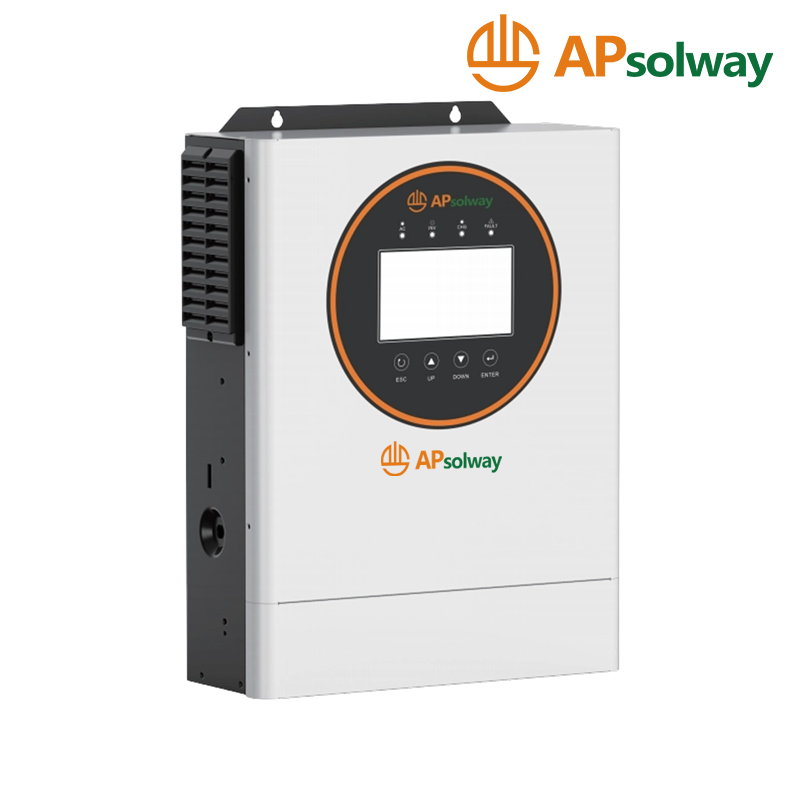
The IP43 rating of an off-grid solar inverter is often misunderstood or oversimplified during system selection. IP43 indicates protection against solid objects larger than 1 mm and water spray at angles up to 60 degrees from vertical. In real off-grid applications, this means the inverter can tolerate dust ingress from typical residential or semi-industrial environments and withstand light rain or splashing, provided installation guidelines are followed.
Unlike fully sealed outdoor-rated enclosures, an IP43 off-grid solar inverter balances protection with ventilation. This design choice supports better thermal dissipation, which is critical for off-grid systems operating under continuous load or in high ambient temperatures.
Why IP43 Is Common in Residential Off-Grid Installations
In residential off-grid scenarios, inverters are frequently installed in utility rooms, garages, equipment sheds, or protected outdoor cabinets. An IP43 off-grid solar inverter is engineered for these semi-protected environments, where full exposure to rain or dust storms is unlikely but airflow is essential.
Higher IP ratings often require sealed housings and active cooling systems, which can increase noise, maintenance complexity, and cost. IP43 designs instead rely on controlled airflow paths and strategic internal layout to manage heat efficiently while maintaining adequate ingress protection.
Thermal Management Advantages of IP43 Enclosures
Natural Convection and Component Longevity
Off-grid solar inverters often operate for extended periods at high load levels, especially in battery-based systems supporting critical household loads. IP43 enclosures typically allow for larger ventilation openings compared to higher-rated housings, improving natural convection and reducing reliance on high-speed fans.
Lower internal temperatures directly impact the lifespan of power electronics such as IGBTs, capacitors, and control boards. For off-grid users, this translates into higher reliability and fewer service interruptions.
Environmental Suitability of IP43 Off-Grid Solar Inverters
IP43 off-grid solar inverters are best suited for environments where direct exposure to harsh weather is limited. Typical use cases include rural homes, cabins, workshops, and small commercial sites with dedicated inverter rooms or shaded mounting locations.
- Indoor installations with moderate dust levels
- Covered outdoor areas protected from direct rainfall
- Utility rooms with controlled airflow
In contrast, fully exposed rooftop or pole-mounted installations generally require higher IP ratings or additional protective enclosures.
Dust Management and Maintenance Considerations
While IP43 provides limited dust protection, fine particulate matter can still enter the enclosure over time. This makes routine inspection and maintenance an important part of long-term off-grid system operation. Installers often recommend positioning IP43 off-grid solar inverters above floor level and away from heavy dust sources such as grinding, woodworking, or agricultural processing areas.
Periodic cleaning of air inlets and internal components helps preserve thermal performance and prevents insulation breakdown caused by dust accumulation.
IP43 vs Higher IP Ratings in Off-Grid Design Choices
Choosing an IP43 off-grid solar inverter is a deliberate design decision rather than a compromise. Higher IP ratings such as IP65 or IP66 offer stronger environmental protection but often introduce thermal challenges and higher system costs.
| IP Rating | Protection Level | Typical Use Case |
| IP43 | Splash & dust protection | Indoor / covered off-grid systems |
| IP65 | Dust-tight & water jets | Fully outdoor installations |
For many residential users, IP43 offers the most efficient balance between protection, cooling, and cost.
Installation Best Practices for IP43 Off-Grid Solar Inverters
Correct installation significantly enhances the real-world performance of an IP43 off-grid solar inverter. Mounting location, orientation, and clearance all influence both ingress protection and heat dissipation.
- Install vertically to support natural airflow paths
- Maintain adequate clearance around ventilation openings
- Avoid areas prone to water splash or condensation
Compatibility with Batteries and Solar Arrays
IP43 off-grid solar inverters are commonly paired with lithium or lead-acid battery banks in residential energy storage systems. The enclosure design supports easy access to DC terminals and communication ports, simplifying system expansion or battery replacement.
Efficient cooling also allows the inverter to handle high charging and discharging currents without thermal throttling, which is especially important during peak solar generation or heavy evening loads.
Operational Reliability in Continuous Off-Grid Use
Off-grid systems often serve as the sole power source for a household or facility, making inverter reliability critical. IP43 off-grid solar inverters are designed for continuous operation, with airflow-focused enclosures reducing stress on internal components.
When installed in suitable environments, these inverters can achieve long service lifespans comparable to higher-rated units, without the penalties of reduced cooling efficiency.
Cost and Lifecycle Value Considerations
From a total cost of ownership perspective, IP43 off-grid solar inverters often deliver strong lifecycle value. Lower enclosure complexity reduces manufacturing and replacement costs, while improved thermal performance minimizes component degradation over time.
For users who can provide a suitable installation environment, IP43-rated inverters represent a practical and technically sound choice rather than a limitation.
When an IP43 Off-Grid Solar Inverter Is the Right Choice
An IP43 off-grid solar inverter is ideal when the system design includes basic environmental protection, such as indoor placement or covered mounting. In these conditions, the inverter benefits from enhanced cooling, easier maintenance access, and lower system costs.
Understanding the real implications of the IP43 rating allows system designers and end users to make informed decisions that prioritize long-term performance over unnecessary specification upgrades.
- Mp: +86-13819379269 / 15726870289
- Tel: +86-573-83705988
- Fax: +86-573-83705966
- E-mail: [email protected]
- Add: 10th Floor, Haizhou Star, Xiuzhou District, Jiaxing City, Zhejiang, China 314000
 Privacy
Solar Inverters Manufacturers
Privacy
Solar Inverters Manufacturers