
 EN
EN English
 Español
 عربى
عربى


Solar Hybrid Inverter Guide: How It Works, Sizing, & Costs
Content
- 1 Bottom line: what a solar hybrid inverter does
- 2 How it works in real life (power flow examples)
- 3 How to size a solar hybrid inverter (quick method)
- 4 Key specs to compare (what actually matters)
- 5 Battery sizing that matches the inverter (kWh and kW)
- 6 Costs and payback: what to expect with hybrid setups
- 7 Conclusion: when a solar hybrid inverter is the right choice
Learn what a solar hybrid inverter does, how to size it, key specs to compare, typical costs, and real-world setup examples.
Bottom line: what a solar hybrid inverter does
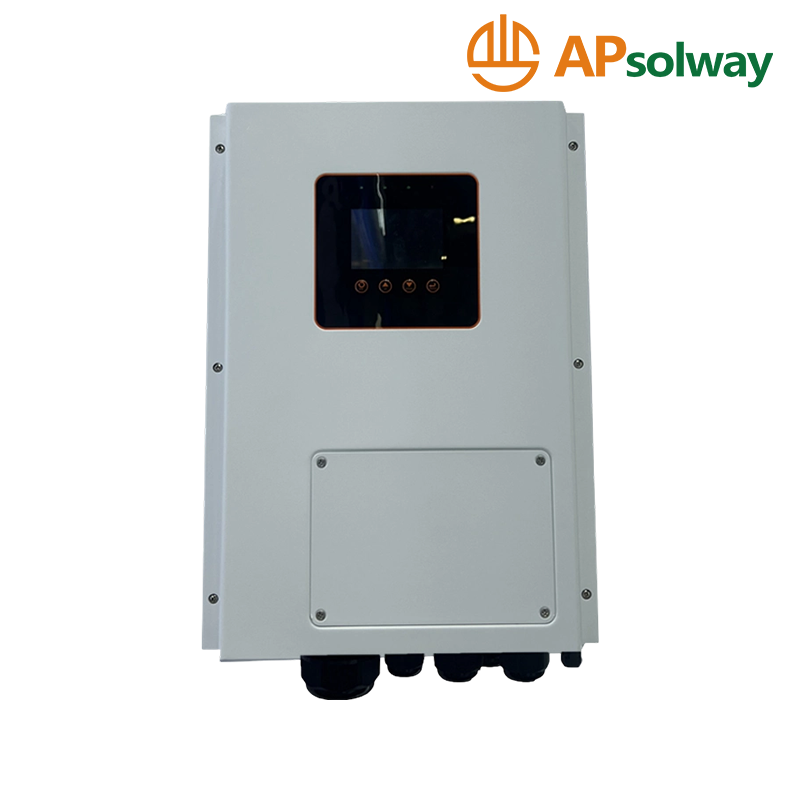
A solar hybrid inverter is the most straightforward way to run solar panels, charge a battery, and power your home from either solar, battery, or the grid—automatically. The practical win is simple: you get backup power plus higher self-consumption of your solar energy without needing separate inverter + charger hardware.
In a typical setup, the hybrid inverter converts DC power from PV into AC for your loads, directs surplus PV to battery charging, and can import from the grid when needed. Many models also provide an “EPS/backup” output that keeps selected circuits running during an outage.
- Solar-first operation: prioritize PV to loads, then battery, then grid.
- Battery charging control: safe charge/discharge limits and scheduling.
- Grid interaction: import/export control and anti-islanding protection.
- Backup supply (if supported): keep critical loads powered during outages.
How it works in real life (power flow examples)
Think in terms of three sources (PV, battery, grid) and your loads. The solar hybrid inverter continuously measures production and demand and then routes energy based on your chosen priority mode.
Example: midday with surplus solar
- Home load: 1.8 kW
- PV output: 4.5 kW
- Surplus: 2.7 kW goes to charge the battery (until it hits limits), then exports to grid if enabled
Example: evening after sunset
- Home load: 1.2 kW
- PV output: 0 kW
- Battery discharge: 1.2 kW until battery reaches minimum state-of-charge (SOC), then grid takes over
Example: outage with critical loads
If your model supports backup/EPS, it isolates from the grid and supplies a dedicated “critical loads” panel. A common limit is that the backup output can’t exceed inverter rating, so if you have a 5 kW inverter, your backed-up circuits must be kept under that ceiling.
How to size a solar hybrid inverter (quick method)
Sizing is mainly about two numbers: the maximum power you want to supply (kW) and how much PV you want to connect (kW) while staying inside voltage/current limits. A practical target is: inverter AC rating ≥ your expected peak essential load (or total load if you want whole-home backup).
Step 1: determine peak essential load
Add the watts of circuits you’ll run during an outage (or your whole house if doing whole-home). Include motor start surges for well pumps, refrigerators, and air conditioners.
- Example essential loads: fridge 150 W (start surge higher), lights 200 W, internet 30 W, outlets 300 W, furnace fan 500 W
- Running total: 1,180 W (~1.2 kW)
- Add headroom for surges: choose a 3–5 kW inverter class for comfortable operation
Step 2: match PV array size to inverter and MPPT limits
Hybrid inverters specify maximum PV power, MPPT voltage range, and maximum PV input current. The most common sizing mistake is exceeding PV input voltage on cold mornings. Use panel datasheets and design so string voltage stays below the inverter max even at low temperatures.
Step 3: confirm battery power and battery voltage compatibility
A battery might store lots of energy (kWh) but still be limited on discharge power (kW). For example, a 10 kWh battery with a 5 kW max discharge can’t support a 7 kW load even if it’s “full.” Ensure the battery’s continuous and surge discharge match your inverter and your loads.
Key specs to compare (what actually matters)
Many hybrid inverters look similar on paper. These are the specs that most strongly affect performance, compatibility, and real-world savings.
| Spec | Why it matters | What to look for |
|---|---|---|
| AC output rating (kW) | Caps what you can run and what can be backed up | ≥ peak essential load plus surge headroom |
| PV input max voltage (Vdc) | Prevents overvoltage damage on cold days | String design stays safely below max at lowest site temps |
| MPPT count and current limits | Affects how many roof orientations you can optimize | 2+ MPPTs for mixed roofs; adequate input current for modern panels |
| Battery voltage and chemistry support | Determines battery compatibility and safety | Compatible voltage (e.g., 48V or HV) and supported BMS protocols |
| Backup/EPS transfer time | Determines if sensitive loads ride through outages | Fast enough for your needs; confirm with manufacturer specs |
| Round-trip efficiency (system) | Impacts how much stored solar you actually get back | Higher is better; compare battery + inverter together |
Battery sizing that matches the inverter (kWh and kW)
Battery sizing is two-dimensional: energy capacity (kWh) determines how long you can run, while power (kW) determines what you can run. For outage planning, start with essentials and decide your target runtime.
Rule-of-thumb runtime estimate
Runtime (hours) ≈ usable battery (kWh) ÷ average load (kW). Usable battery is often less than nameplate because you may reserve SOC for battery longevity.
- If you have 10 kWh battery and use 80% (8 kWh usable)
- Average essential load = 0.8 kW
- Estimated runtime ≈ 10 hours (8 ÷ 0.8)
Don’t ignore peak power
If your solar hybrid inverter can output 6 kW but your battery can only deliver 3 kW continuous, the real limit is 3 kW. Always check the battery’s continuous and peak discharge ratings.
Costs and payback: what to expect with hybrid setups
Total cost depends heavily on battery size and installation complexity. A helpful planning approach is to separate costs into three buckets: inverter, battery, and balance-of-system (switchgear, critical loads panel, wiring, labor).
Savings example (self-consumption shift)
If a battery lets you shift 5 kWh/day of solar from midday export to evening use, that’s 150 kWh/month. If the value of that shift (retail rate minus export credit) is, for example, $0.15/kWh, the monthly value is $22.50 (150 × 0.15). Real results vary by tariff, export rules, and seasonal production, but this shows how to translate “kWh shifted” into dollars.
- Best-case economics: high evening rates + low export credits + consistent surplus PV
- Best-case resilience: frequent outages where backup power has high value
- If your goal is only savings, prioritize efficiency, tariff fit, and cycle life
Conclusion: when a solar hybrid inverter is the right choice
Choose a solar hybrid inverter when you want one integrated device to manage solar generation, battery charging, and grid interaction—especially if backup power matters. The best results come from sizing to your real peak essential load, designing PV strings within voltage/current limits, and matching the battery’s kW capability to the inverter’s output.
If you do those three things well, a solar hybrid inverter setup reliably delivers what most homeowners are after: more usable solar energy, lower reliance on the grid during peak hours, and resilient power during outages.
- Mp: +86-13819379269 / 15726870289
- Tel: +86-573-83705988
- Fax: +86-573-83705966
- E-mail: [email protected]
- Add: 10th Floor, Haizhou Star, Xiuzhou District, Jiaxing City, Zhejiang, China 314000
 Privacy
Solar Inverters Manufacturers
Privacy
Solar Inverters Manufacturers