
 EN
EN English
 Español
 عربى
عربى


What Types of Solar Inverters Are Available, How Do They Work, and Which One Should You Choose?
Content
- 1 Why the Solar Inverter Is the Most Critical Component in Your PV System
- 2 How Solar Inverters Work: The Core Conversion Process
- 3 String Inverters: The Traditional Workhorse of Solar Installations
- 4 Microinverters: Panel-Level Conversion for Maximum Flexibility
- 5 Power Optimizers: A Hybrid Approach to Panel-Level Performance
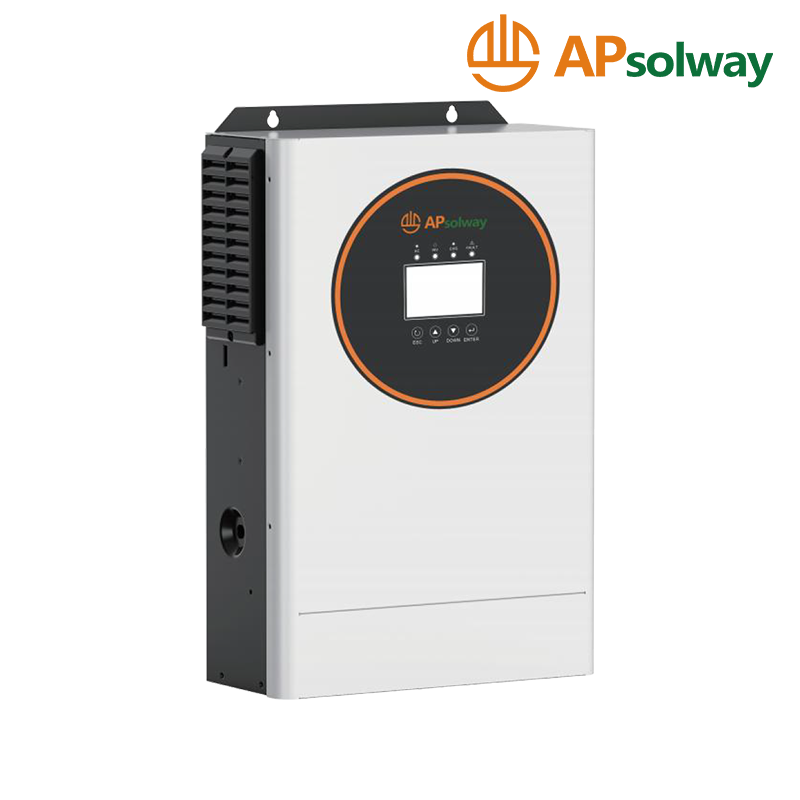
- 6 Hybrid Inverters: Integrating Solar, Battery, and Grid in One Unit
- 7 Comparing Solar Inverter Types: Key Differences at a Glance
- 8 Key Benefits of Modern Solar Inverters Beyond Basic Conversion
- 9 How to Choose the Right Solar Inverter for Your System
Why the Solar Inverter Is the Most Critical Component in Your PV System
When most people think about solar energy systems, they focus on the solar panels themselves — the photovoltaic (PV) modules that capture sunlight and convert it into electricity. However, the electricity that solar panels produce is direct current (DC), and virtually every household appliance, light fixture, and electronic device in a home or commercial building runs on alternating current (AC). The component that bridges this gap — converting the DC output of your solar panels into usable AC power — is the solar inverter. Without a functioning inverter, your solar panels cannot power a single appliance in your home, feed energy back to the grid, or charge a battery storage system in a usable form.
Beyond the basic DC-to-AC conversion function, modern solar inverters perform a range of additional tasks that are critical to system safety, efficiency, and longevity. They continuously track the maximum power point of the solar array to extract the highest possible energy yield under varying sunlight conditions. They monitor grid frequency and voltage to ensure the power they inject is synchronized with the utility grid. They provide protection functions that automatically disconnect the system during grid faults or dangerous voltage conditions. And increasingly, they communicate performance data to monitoring platforms that allow system owners and installers to track energy production in real time and detect problems before they cause significant energy losses. Understanding the different types of solar inverters and how each one works is essential knowledge for anyone planning, purchasing, or maintaining a solar energy installation.
How Solar Inverters Work: The Core Conversion Process
The fundamental operating principle of a solar inverter involves taking the DC voltage produced by solar panels and switching it on and off at high frequency using transistors — typically insulated gate bipolar transistors (IGBTs) or metal-oxide-semiconductor field-effect transistors (MOSFETs) — to produce a pulsating waveform. This raw pulsating output is then filtered through inductors and capacitors to smooth it into a sinusoidal AC waveform that matches the frequency and voltage of the utility grid — 50 Hz in most of the world, 60 Hz in North America and parts of South America.
A critical function performed simultaneously with the conversion process is Maximum Power Point Tracking (MPPT). Solar panels do not produce a constant voltage — their output voltage and current vary depending on sunlight intensity, panel temperature, and shading conditions. At any given moment, there is a specific combination of voltage and current at which the panel produces its maximum power output — the maximum power point. The inverter's MPPT algorithm continuously samples the panel's output and adjusts the operating point to stay at or very near this maximum power point, extracting the most energy possible across changing conditions throughout the day. Without effective MPPT, a solar system can lose 10–30% of its potential energy yield depending on conditions.
For grid-tied systems, the inverter also performs grid synchronization — matching the phase, frequency, and voltage of its AC output precisely to the utility grid before connecting. Anti-islanding protection is a mandatory safety function that automatically shuts the inverter down if the grid fails or is disconnected for maintenance. This prevents the inverter from continuing to energize grid lines while utility workers may be working on what they believe to be a de-energized circuit — a potentially fatal hazard without this protection.
String Inverters: The Traditional Workhorse of Solar Installations
String inverters are the oldest and most widely deployed type of solar inverter. In a string inverter system, multiple solar panels are connected in series to form a "string," and the combined DC output of the entire string is fed to a single centralized inverter. Most residential and small commercial systems use one or two string inverters to handle the full array output. String inverters are robust, relatively simple in design, cost-effective, and have a long track record of reliable performance over 10–15+ year service lives.
The primary limitation of string inverters stems directly from their series-string architecture. Because all panels in a string are electrically connected in series, the current through the entire string is limited by the weakest-performing panel. If even one panel in a string is shaded by a chimney, a tree branch, or accumulated dirt, the current output of that panel drops — and since current must be equal throughout a series circuit, the output of every other panel in the string is pulled down to match. This "Christmas light effect" can cause disproportionate energy losses: a single panel producing 50% of its rated output can reduce the output of the entire string by a similar proportion, even though all other panels are performing normally. For rooftops with uniform orientation, unobstructed sun exposure, and consistent panel performance, string inverters remain an excellent, cost-effective choice.
Microinverters: Panel-Level Conversion for Maximum Flexibility
Microinverters solve the shading and mismatch problem of string inverters by placing a small, dedicated inverter directly on the back of each individual solar panel. Each microinverter independently converts the DC output of its single panel to AC, and the AC outputs of all microinverters are combined on the AC side and fed to the building's electrical panel. Because each panel operates independently, partial shading or degradation of one panel has no effect whatsoever on the output of its neighbors — each panel continues to operate at its own maximum power point regardless of what is happening to the panels around it.
This panel-level independence also provides significant monitoring advantages. Since each microinverter reports its performance data individually, system owners and installers can identify exactly which panel is underperforming and why — whether due to shading, soiling, or a developing fault — without the guesswork involved in diagnosing string-level performance drops. Microinverters also eliminate the high-voltage DC wiring that runs between panels and a central string inverter, which reduces fire risk and simplifies installation in some jurisdictions. The main trade-off is cost: a microinverter system is typically 20–30% more expensive than an equivalent string inverter installation, and because microinverters are mounted outdoors on the roof, they must withstand thermal cycling and UV exposure that central inverters installed in sheltered locations do not face.
Power Optimizers: A Hybrid Approach to Panel-Level Performance
Power optimizers represent a middle path between string inverters and microinverters. Like microinverters, power optimizers are installed on the back of each individual panel and perform panel-level MPPT — ensuring each panel operates at its own maximum power point independently of its string neighbors. However, unlike microinverters, power optimizers do not perform the DC-to-AC conversion themselves. Instead, they output a conditioned and optimized DC signal that is fed to a central string inverter for the actual inversion process. This architecture combines the panel-level optimization benefits of microinverters with the reliability and cost advantages of a single, centrally located inverter for the conversion stage.
SolarEdge is the dominant manufacturer in the power optimizer category, and their optimizer-plus-inverter systems are among the most widely installed residential solar configurations globally. Power optimizer systems also provide panel-level monitoring data and offer a module-level shutdown capability for firefighter safety — a feature increasingly mandated by electrical codes in many jurisdictions that requires solar systems to be safely de-energizable at the panel level during emergencies.
Hybrid Inverters: Integrating Solar, Battery, and Grid in One Unit
Hybrid inverters — also called multi-mode inverters or storage-ready inverters — combine the functions of a solar inverter and a battery inverter/charger in a single unit. They can simultaneously manage the DC output of a solar array, charge and discharge a connected battery bank, supply power to household loads from either solar or battery sources, and interact bidirectionally with the utility grid. This integration makes hybrid inverters the preferred choice for solar-plus-storage systems because they eliminate the need for separate solar and battery inverter units and simplify system wiring and control.
Advanced hybrid inverters support multiple operating modes that can be configured based on the owner's priorities and utility rate structures. In self-consumption mode, solar energy powers household loads first, with excess energy stored in the battery for use after sunset rather than exported to the grid. In backup mode, the battery is reserved as an emergency power source and only discharged during grid outages, maintaining the home's critical loads. Time-of-use optimization mode charges the battery during periods of low grid electricity cost and discharges it during peak pricing periods, maximizing financial savings in markets with time-variable electricity rates. These sophisticated control capabilities make hybrid inverters central to the energy management strategy of modern smart homes and commercial solar-storage installations.
Comparing Solar Inverter Types: Key Differences at a Glance
The table below provides a structured side-by-side comparison of the four main solar inverter types across the parameters that matter most for system selection:
| Inverter Type | MPPT Level | Shading Tolerance | Battery Ready | Relative Cost | Best For |
| String Inverter | String level | Low | No (standard) | Lowest | Unshaded, uniform rooftops |
| Microinverter | Panel level | Excellent | Some models | Highest | Complex rooftops, heavy shading |
| Power Optimizer + String | Panel level | Excellent | Some models | Medium-High | Partial shading, mixed orientations |
| Hybrid Inverter | String level | Medium | Yes (built-in) | Medium-High | Solar + battery storage systems |
Key Benefits of Modern Solar Inverters Beyond Basic Conversion
The value of a modern solar inverter extends well beyond the fundamental DC-to-AC conversion function. Advances in inverter technology over the past decade have added capabilities that significantly improve system performance, owner control, and financial returns from solar investments.
- Real-Time Monitoring and Remote Diagnostics: Most modern inverters connect via Wi-Fi or Ethernet to cloud-based monitoring platforms that display live and historical energy production data on smartphones or web browsers. This allows system owners to immediately detect underperformance and enables installers to remotely diagnose many fault conditions without a site visit, reducing maintenance costs and downtime.
- Grid Support Functions: Advanced inverters can provide reactive power support, voltage regulation, and frequency response services to the grid — capabilities that grid operators increasingly require as solar penetration rises. In some markets, these grid support functions are compensated financially, providing an additional revenue stream for system owners with compatible inverters.
- Arc Fault Detection: High-quality inverters include arc fault circuit interrupter (AFCI) technology that detects the electrical signature of arc faults in the DC wiring — a leading cause of solar-related electrical fires — and shuts down the system before damage occurs.
- Rapid Shutdown Compliance: Modern inverters support rapid shutdown systems that de-energize the roof-level DC wiring to safe voltage levels within seconds of activation — a critical firefighter safety feature now required by the National Electrical Code (NEC) in the United States and by equivalent regulations in other jurisdictions.
- Firmware Updateability: Leading inverter manufacturers deliver performance improvements and new features through over-the-air firmware updates, meaning an inverter purchased today can gain new capabilities — such as improved MPPT algorithms or additional grid support functions — without hardware replacement, extending the useful life and value of the investment.
How to Choose the Right Solar Inverter for Your System
Selecting the correct inverter for a specific solar installation requires evaluating several interconnected factors. There is no universally correct answer — the best inverter depends on the characteristics of the installation site, the system owner's priorities, and the long-term plans for the energy system.
- Roof Characteristics and Shading: For rooftops with a single unobstructed south-facing plane and no shading obstacles, a string inverter offers excellent value. For rooftops with multiple orientations, chimneys, dormers, or nearby trees that cause partial shading, microinverters or power optimizers will deliver significantly better energy yields that can justify their higher cost over the system's lifetime.
- Battery Storage Plans: If adding battery storage is a near-term or long-term goal, a hybrid inverter specified from the outset is almost always more cost-effective than retrofitting a separate battery inverter to an existing string inverter system. Even if batteries are not being installed immediately, selecting a hybrid inverter at installation eliminates the need for additional hardware and rewiring when storage is added later.
- System Size and Scalability: For large commercial installations, central inverters — larger versions of string inverters designed for utility-scale systems — offer the lowest cost per watt of inverter capacity and are the standard choice for ground-mounted arrays of several hundred kilowatts or larger. For residential and small commercial systems, string inverters, microinverters, and hybrid inverters are the appropriate categories.
- Manufacturer Warranty and Support: Solar inverters are expected to last 10–15 years or more. Warranty coverage — typically 5 to 12 years for string and hybrid inverters, and 25 years for some microinverter brands — and the manufacturer's financial stability and support infrastructure are critical selection factors. An inverter from a manufacturer that exits the market leaves system owners without firmware support, spare parts, or warranty service.
- Local Grid Regulations and Utility Requirements: Different utility companies and regional grid operators impose specific technical requirements on grid-tied inverters — permissible voltage and frequency ranges, anti-islanding methods, reactive power capabilities, and communication protocols. Confirm that any inverter under consideration is certified to meet the applicable standards in your jurisdiction (such as UL 1741 in the USA, VDE-AR-N 4105 in Germany, or AS/NZS 4777 in Australia) before purchase.
- Mp: +86-13819379269 / 15726870289
- Tel: +86-573-83705988
- Fax: +86-573-83705966
- E-mail: [email protected]
- Add: 10th Floor, Haizhou Star, Xiuzhou District, Jiaxing City, Zhejiang, China 314000
 Privacy
Solar Inverters Manufacturers
Privacy
Solar Inverters Manufacturers