
 EN
EN English
 Español
 عربى
عربى


How Do Solar On Grid Inverters Work and Are They Right for Your Home?
Content
- 1 What Is a Solar On Grid Inverter and How Does It Function?
- 2 Types of Solar On Grid Inverters Available Today
- 3 Critical Specifications to Compare When Selecting an On Grid Inverter
- 4 How Net Metering Works with On Grid Solar Inverters
- 5 Installation Requirements and Grid Connection Process
- 6 Monitoring Your On Grid Inverter's Performance
- 7 Leading Solar On Grid Inverter Brands and What Sets Them Apart
- 8 When to Consider Upgrading or Replacing Your On Grid Inverter
What Is a Solar On Grid Inverter and How Does It Function?
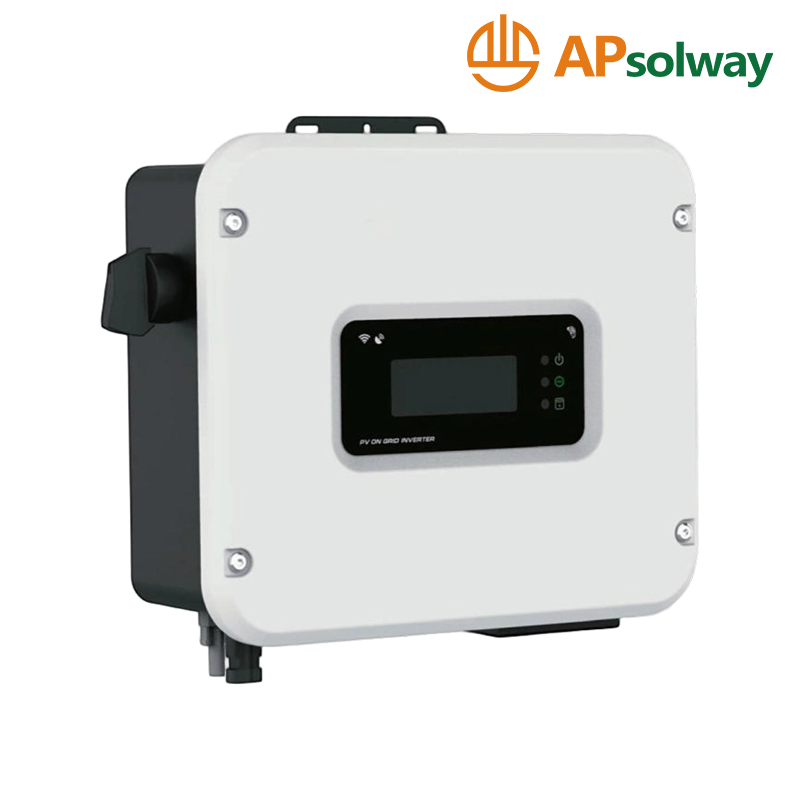
A solar on grid inverter — also called a grid-tied inverter — is the central electronic device in a grid-connected solar photovoltaic (PV) system. Its primary job is to convert the direct current (DC) electricity generated by solar panels into alternating current (AC) electricity that matches the voltage, frequency, and phase of the utility grid. This synchronization process is not passive; the inverter continuously monitors the grid's waveform in real time and adjusts its output to stay precisely in phase, allowing the solar-generated power to flow seamlessly into your home's electrical circuits and, when production exceeds consumption, back into the utility grid.
Unlike off-grid inverters, which store energy in batteries for use during outages, on grid inverters are designed to operate only when the utility grid is live. This is a deliberate safety requirement — if the grid goes down for maintenance or due to a fault, the inverter must detect the outage within milliseconds and shut down automatically. This anti-islanding protection prevents solar-generated electricity from back-feeding into de-energized utility lines, which would create dangerous conditions for line workers performing repairs. It also means that a standard grid-tied system without a battery backup will go dark during a power outage, even if the sun is shining brightly.
Types of Solar On Grid Inverters Available Today
The market for grid-tied solar inverters has evolved significantly over the past decade, offering homeowners and commercial installers several distinct architectures — each with its own performance characteristics, cost profile, and ideal application.
String Inverters
String inverters are the most widely installed type in residential and small commercial systems. In this configuration, multiple solar panels are wired in series to form a "string," and the combined DC output of the entire string feeds into a single inverter. String inverters are cost-effective, easy to service, and have a long track record of reliability. Their main limitation is that the entire string's output is constrained by its weakest panel — if one panel is shaded, soiled, or degraded, the production of every other panel in that string is pulled down proportionally. This makes string inverters best suited for rooftops with consistent, unobstructed sun exposure and panels facing the same direction at the same tilt angle.
Microinverters
Microinverters are small inverter units installed directly on the back of each individual solar panel, converting DC to AC at the panel level before sending power to the home's electrical panel. Because each panel operates independently, shading or soiling on one panel has no effect on the others, which can yield significantly higher total energy harvest on complex rooftops with multiple orientations or partial shading from chimneys, vents, or nearby trees. Microinverters also provide panel-level monitoring, making it easy to identify underperforming modules. The trade-off is a higher upfront cost and more components to potentially fail over a 25-year system lifespan.
Power Optimizers with String Inverters
DC power optimizers represent a hybrid approach — module-level electronics are attached to each panel to perform maximum power point tracking (MPPT) individually, conditioning the DC output before sending it to a centralized string inverter for grid conversion. This architecture combines the panel-level optimization of microinverters with the proven reliability and lower cost of a single central inverter. Brands like SolarEdge have popularized this topology, and it is now a common choice for residential systems where some shading is present but a full microinverter solution is not justified economically.
Critical Specifications to Compare When Selecting an On Grid Inverter
Selecting the right solar on grid inverter requires careful evaluation of several technical parameters. Ignoring these specifications during the selection process often leads to underperformance, premature equipment failure, or incompatibility with your solar array design.
| Specification | What It Means | What to Look For |
| Peak Efficiency | Maximum DC-to-AC conversion efficiency | 98% or higher for premium models |
| CEC Weighted Efficiency | Real-world efficiency across operating conditions | 96–97.5% for quality residential inverters |
| MPPT Voltage Range | DC input voltage range where MPPT is active | Wide range (e.g., 200–800V) for design flexibility |
| Number of MPPT Inputs | Independent trackers for multiple string orientations | 2+ MPPT inputs for complex rooftops |
| Operating Temperature Range | Temperatures at which inverter performs at full rated output | -25°C to 60°C for most climates |
| Warranty | Manufacturer's coverage period | 10–12 years standard; 20–25 years extendable |
One specification that is frequently overlooked is the inverter's clipping ratio — the relationship between the rated DC input capacity of the inverter and the total DC wattage of the solar array connected to it. Slightly oversizing the array relative to the inverter's rated AC output (a ratio of 1.1 to 1.25 is common) allows the inverter to operate at or near full capacity for more hours per day, increasing annual energy yield without requiring a larger inverter. This practice, known as DC oversizing or array-to-inverter ratio optimization, is standard in professional system design.
How Net Metering Works with On Grid Solar Inverters
One of the primary financial benefits of a grid-tied solar system is net metering — a billing arrangement that credits solar system owners for the excess electricity they export to the utility grid. When your solar panels produce more power than your home is consuming at a given moment, the surplus flows through your on grid inverter and back into the utility grid, spinning your electricity meter backward (or recording a credit in digital metering systems). At times when your consumption exceeds solar production — such as at night or on cloudy days — you draw from the grid as normal, and those credits offset the electricity charges you accumulate.
Net metering policies vary significantly by country, state, and utility provider. Some jurisdictions offer full retail-rate credits for every kilowatt-hour exported, making grid export nearly as valuable as direct self-consumption. Others have moved to reduced export rates or time-of-use structures that pay more for power exported during peak demand hours. Understanding your local net metering policy before sizing your system is essential — in markets with reduced export rates, maximizing self-consumption through load shifting or adding battery storage may deliver better financial returns than maximizing panel output alone.
Installation Requirements and Grid Connection Process
Installing a solar on grid inverter involves more than mounting the unit on a wall and connecting cables. The process requires compliance with electrical codes, utility interconnection agreements, and local building permit requirements — all of which vary by jurisdiction but share a common set of practical steps.
- System design and permitting: Before installation begins, a licensed solar installer or electrical engineer must produce a system design drawing that documents panel layout, string configuration, wire sizing, conduit routing, and inverter placement. This design package is submitted to the local building department for permit approval, a process that typically takes one to four weeks depending on the jurisdiction.
- Utility interconnection application: Simultaneously, an interconnection application must be submitted to the utility company. This application notifies the utility of the intended grid-tied installation and triggers a review of the local grid infrastructure to confirm it can safely accept the additional generation capacity. Most residential systems are approved quickly through a simplified process, but larger commercial installations may require engineering studies.
- Physical installation: The inverter must be mounted in a location that is accessible for maintenance and monitoring, protected from direct rainfall if it lacks a full outdoor weatherproof rating, and positioned with adequate ventilation clearance. AC and DC disconnects required by electrical code must be installed adjacent to or near the inverter to allow utility workers and emergency responders to quickly de-energize the system.
- Inspection and permission to operate: After installation, a building inspector must verify that the work complies with the approved permit drawings. Once the inspection passes, the utility company issues Permission to Operate (PTO), which allows the system to be energized and connected to the grid. Operating a grid-tied inverter before receiving PTO can result in fines and forced disconnection.
Monitoring Your On Grid Inverter's Performance
Modern solar on grid inverters include built-in monitoring capabilities that provide real-time and historical data on energy production, system efficiency, and fault conditions. Most manufacturers offer cloud-connected monitoring platforms accessible via web browser or smartphone app, allowing homeowners to track daily, monthly, and annual generation totals, compare performance against expected yield, and receive alerts when the inverter detects an error or operates outside normal parameters.
Actively monitoring your inverter's performance data is one of the most effective ways to protect your solar investment. Common issues that monitoring can detect early include partial shading from new obstructions such as tree growth, individual panel degradation beyond the normal 0.5% per year rate, loose DC connections causing arc faults, and inverter temperature derating during heat waves that reduces afternoon output. Catching these issues early — rather than discovering them during an annual system check — can prevent months of lost energy production and revenue.
Leading Solar On Grid Inverter Brands and What Sets Them Apart
The global market for grid-tied solar inverters is served by dozens of manufacturers, but a smaller group of brands consistently delivers proven reliability, strong warranty support, and advanced feature sets that justify their market-leading positions.
- SMA Solar Technology: The German manufacturer SMA is widely regarded as the industry benchmark for string inverter reliability. Their Sunny Boy residential line and Sunny Tripower commercial series offer peak efficiencies above 97%, robust monitoring via the SMA Energy app, and a global service network that makes warranty claims manageable regardless of location.
- Fronius: Austrian manufacturer Fronius produces highly regarded transformerless string inverters known for their wide MPPT voltage range and exceptional CEC weighted efficiency. The Fronius Primo and Symo series are popular choices for installers who prioritize design flexibility across varied roof configurations.
- SolarEdge: SolarEdge's DC-optimized inverter platform — combining module-level power optimizers with a central inverter — has captured significant residential market share globally. Their HD-Wave inverter technology achieves CEC efficiencies above 99% in some models and supports integrated EV charging and battery storage expansion through the same platform.
- Enphase Energy: Enphase dominates the microinverter segment with their IQ series, which features individual panel-level conversion, built-in rapid shutdown compliance, and a comprehensive Enlighten monitoring platform. Their system architecture eliminates high-voltage DC wiring on the roof, which appeals to installers and homeowners prioritizing safety.
- Huawei and Sungrow: Chinese manufacturers Huawei FusionSolar and Sungrow have gained substantial market share in Asia, Europe, and emerging markets by offering competitive efficiency ratings and advanced grid support features at aggressive price points. Both brands are particularly strong in the utility-scale and large commercial segment.
When to Consider Upgrading or Replacing Your On Grid Inverter
Solar panels are warranted for 25 to 30 years, but most string inverters carry standard warranties of only 10 to 12 years. This means the majority of residential solar systems installed in the past decade will require at least one inverter replacement during their panel lifespan. Recognizing the signs of inverter degradation helps homeowners plan replacements proactively rather than experiencing unexpected system downtime.
Key indicators that an on grid inverter may need replacement include a noticeable and unexplained decline in daily energy production compared to historical data for similar weather conditions, frequent error codes or fault shutdowns that reset without a clear cause, unusual heat generation from the inverter chassis at normal output levels, and communication failures that prevent monitoring data from being transmitted to the cloud platform. When an inverter approaches or exceeds its warranty period, proactively replacing it with a current-generation model also provides an opportunity to access newer features such as rapid shutdown compliance, integrated consumption monitoring, and battery storage readiness — capabilities that were not available in inverters installed a decade ago.
- Mp: +86-13819379269 / 15726870289
- Tel: +86-573-83705988
- Fax: +86-573-83705966
- E-mail: [email protected]
- Add: 10th Floor, Haizhou Star, Xiuzhou District, Jiaxing City, Zhejiang, China 314000
 Privacy
Solar Inverters Manufacturers
Privacy
Solar Inverters Manufacturers