
 EN
EN English
 Español
 عربى
عربى


How Do Solar On Grid Inverters Work and Which One Should You Choose?
Content
- 1 What Is a Solar On Grid Inverter and How Does It Work?
- 2 Types of Solar On Grid Inverters
- 3 Key Technical Specifications Explained
- 4 Maximum Power Point Tracking: The Heart of Energy Harvest
- 5 Grid Compliance, Safety Standards, and Certifications
- 6 Monitoring Systems and Smart Features in Modern Inverters
- 7 Installation Considerations for Solar On Grid Inverters
- 8 How to Choose the Right Solar On Grid Inverter for Your System
What Is a Solar On Grid Inverter and How Does It Work?
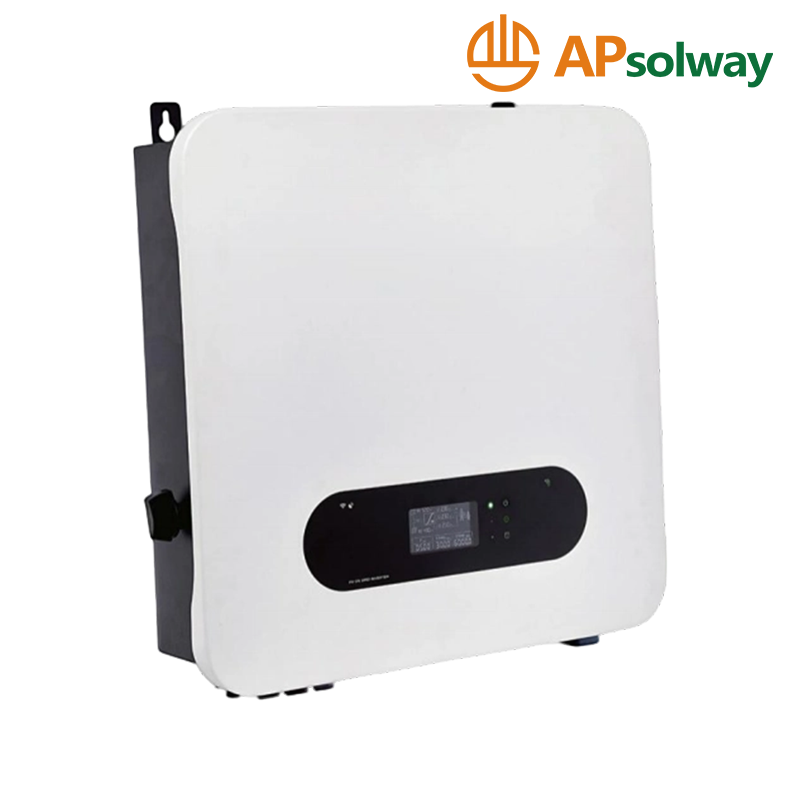
A solar on grid inverter, also known as a grid-tied inverter or grid-connected inverter, is the central processing unit of a grid-connected photovoltaic (PV) system. Its primary function is to convert the direct current (DC) electricity generated by solar panels into alternating current (AC) electricity that matches the voltage, frequency, and phase of the utility grid — typically 230V/50Hz in Europe and most of Asia, or 120V/240V at 60Hz in North America. Once converted, this AC power can be consumed directly by household or commercial loads, fed back into the utility grid, or both simultaneously depending on instantaneous energy demand and generation levels.
Unlike off-grid inverters, a solar on grid inverter does not operate with battery storage as a mandatory component. It relies on the grid as a virtual battery — exporting surplus solar energy when generation exceeds local consumption and importing grid power when solar output is insufficient. This continuous synchronization with the grid requires the inverter to perform real-time phase-locking using internal phase-locked loop (PLL) circuits, and it must immediately shut down if grid power is lost — a safety feature known as anti-islanding protection — to prevent energized lines from endangering utility workers during outages.
Types of Solar On Grid Inverters
The on grid inverter market offers several distinct architectures, each suited to different system sizes, roof configurations, shading conditions, and budget levels. Understanding the differences between these types is essential before committing to a system design.
String Inverters
A string inverter connects multiple solar panels wired in series — forming a "string" — to a single centralized inverter unit. This is the most widely installed and cost-effective topology for residential and small commercial systems with unshaded, uniformly oriented roof surfaces. String inverters are available in single-phase models from 1 kW to 10 kW and three-phase models from 5 kW to 100 kW or more. The main limitation of string inverters is that the entire string's performance is constrained by the weakest-performing panel — if one panel is shaded, soiled, or degraded, the output of every other panel in that string is reduced to match.
Microinverters
Microinverters are small inverters mounted directly behind each individual solar panel, converting DC to AC at the panel level rather than at a central location. This panel-level conversion eliminates the string mismatch problem entirely — each panel operates at its own maximum power point independently. Microinverters are the preferred choice for roofs with complex shapes, multiple orientations, or partial shading from chimneys, vents, or nearby trees. They also simplify system expansion, since additional panels with their own microinverters can be added without replacing the central inverter. The trade-off is a higher upfront cost per watt compared to string inverters, and more installation points that require long-term reliability at the rooftop level.
Power Optimizers With String Inverters
Power optimizers are DC-DC converters attached to each panel that perform individual maximum power point tracking (MPPT) at the module level before sending conditioned DC power to a central string inverter for AC conversion. This hybrid approach captures most of the energy harvest benefits of microinverters while retaining the cost efficiency and simpler AC wiring of a string inverter. Systems using power optimizers also provide panel-level monitoring, allowing owners and installers to identify underperforming panels quickly. SolarEdge is the dominant provider of this architecture, and their systems are widely used in residential installations across Europe and North America.
Central Inverters
Central inverters are large, single-cabinet units handling hundreds of kilowatts to multiple megawatts of solar input. They are designed exclusively for utility-scale solar farms and large commercial rooftop systems where many strings are combined into combiner boxes before feeding a single high-power inverter. Central inverters offer the lowest cost per watt at scale but provide no panel-level optimization and require significant dedicated space, advanced cooling systems, and specialized maintenance personnel.
Key Technical Specifications Explained
Evaluating solar on grid inverters requires understanding the core specifications that determine compatibility, performance, and long-term reliability. The following table summarizes the most important parameters and their practical significance:
| Specification | Typical Range | Why It Matters |
| Peak Efficiency | 97% – 99% | Higher efficiency means less energy lost as heat during conversion |
| European / CEC Efficiency | 95% – 98% | Weighted average efficiency across real-world operating conditions |
| MPPT Voltage Range | 80V – 800V DC | Determines compatible panel string configurations and voltages |
| Number of MPPT Inputs | 1 – 6 | More MPPTs allow strings on different orientations or tilt angles |
| Max DC Input Voltage | 600V – 1500V | Higher voltage allows longer strings, reducing wiring losses |
| Nighttime Power Consumption | <1W – 5W | Lower standby draw reduces parasitic losses over the system lifetime |
| Warranty Period | 5 – 12 years standard | Reflects manufacturer confidence in long-term component reliability |
When comparing inverters, focus on European weighted efficiency or CEC weighted efficiency rather than peak efficiency alone, since peak efficiency is achieved only at a single optimal operating point that rarely represents average real-world conditions. An inverter with 97% peak efficiency but 93% weighted efficiency will underperform one rated at 98.5% peak with 97% weighted efficiency over the life of the system.
Maximum Power Point Tracking: The Heart of Energy Harvest
Maximum power point tracking (MPPT) is the algorithmic process by which a solar on grid inverter continuously adjusts the electrical operating point of the PV array to extract the maximum available power under constantly changing conditions of irradiance, temperature, and shading. Solar panels do not produce a fixed voltage and current — their output characteristics shift throughout the day as the sun angle changes, clouds pass, and panel temperatures fluctuate. Without MPPT, a fixed-load inverter would operate at a suboptimal point on the panel's I-V curve, leaving significant potential energy uncaptured.
Modern on grid inverters implement MPPT using algorithms such as Perturb and Observe (P&O), Incremental Conductance (INC), or more advanced adaptive methods that respond faster to rapid irradiance changes caused by cloud shadows. Premium inverters with multiple independent MPPT inputs allow separate strings of panels — potentially facing different compass directions or installed at different tilt angles — to each operate at their own individual maximum power point simultaneously, preventing the lower-performing string from degrading the output of a higher-performing one.
Grid Compliance, Safety Standards, and Certifications
Solar on grid inverters must comply with a range of national and international standards before they can be legally connected to the utility grid. These standards govern anti-islanding protection, power quality, harmonic distortion limits, and grid support functions such as reactive power control and frequency response. Purchasing a certified inverter is not optional — utility companies and electrical inspectors require compliance documentation before approving grid connection.
- IEC 62109-1 / IEC 62109-2: International safety standards covering the construction and electrical safety of power converters for use in photovoltaic systems, including insulation, protective earthing, and enclosure requirements.
- EN 50549 / VDE-AR-N 4105: European grid connection standards specifying requirements for low-voltage connected generators, including voltage and frequency ride-through capability and reactive power injection.
- UL 1741 / IEEE 1547: United States standards governing the interconnection of distributed energy resources with the grid, including anti-islanding, voltage regulation, and power quality requirements.
- AS/NZS 4777: Australian and New Zealand standard for grid connection of energy systems via inverters, mandating specific demand response and volt-VAR response capabilities increasingly required by network operators.
- CE Marking (Europe): Confirms compliance with EU directives including the Low Voltage Directive (LVD) and Electromagnetic Compatibility (EMC) Directive, required for legal sale and installation within the European Economic Area.
Monitoring Systems and Smart Features in Modern Inverters
Contemporary solar on grid inverters go well beyond simple DC-to-AC conversion. Leading manufacturers integrate sophisticated monitoring platforms, communication interfaces, and smart grid response capabilities that give system owners and installers detailed visibility into system performance and remote management capability.
Wi-Fi and Cloud Monitoring
Most modern residential on grid inverters include built-in Wi-Fi connectivity that links the inverter to the manufacturer's cloud platform via the home router. Owners can access real-time and historical generation data, energy yield statistics, fault alerts, and performance comparisons through a smartphone app or web portal. This monitoring capability allows homeowners to quickly identify production drops caused by soiling, shading changes, or component degradation — and provides the data trail needed to support warranty claims.
Export Limitation and Zero Export Control
In many jurisdictions, grid operators restrict the amount of solar power a domestic system can export to the grid, or prohibit export entirely. Modern on grid inverters support zero-export or export limitation modes using a CT clamp sensor installed at the grid connection point. The inverter continuously monitors net import/export and throttles its output to prevent grid export above the permitted threshold — a feature essential for compliance with feed-in regulations in markets such as Australia, China, and parts of Europe.
Battery-Ready and Hybrid Compatibility
An increasing number of on grid inverters are designed as "battery-ready," featuring a DC-coupled battery port or a communication interface that allows a battery storage system to be added in the future without replacing the inverter. Some manufacturers — including Huawei, SMA, and Fronius — offer full hybrid inverter models that function as both grid-tied and battery-backed units, enabling self-consumption optimization and limited backup power functionality while maintaining full grid-tie operation during normal conditions.
Installation Considerations for Solar On Grid Inverters
Correct installation of a solar on grid inverter is critical to achieving the rated performance, maintaining warranty validity, and ensuring long-term safety. Key installation factors include location, string design, and commissioning procedure.
- Mounting location: Inverters should be installed in a shaded, well-ventilated location protected from direct sunlight and rain. Operating temperature significantly affects inverter efficiency and lifespan — most units begin to derate output above 45°C to 50°C ambient temperature. Indoor garage walls or shaded external walls are preferred over direct outdoor sun exposure.
- String voltage design: The number of panels per string must be calculated to keep the string open-circuit voltage (Voc) within the inverter's maximum DC input voltage rating under the coldest expected ambient temperature, since Voc increases as panel temperature decreases. Exceeding the inverter's maximum DC input voltage will permanently damage the unit and void the warranty.
- DC isolator and AC protection: Most jurisdictions require a DC disconnect switch adjacent to the inverter and AC overcurrent protection at the distribution board. These components must be rated appropriately for the system's maximum voltage and current and must comply with local electrical codes.
- Earthing and surge protection: The inverter chassis, panel frames, and mounting structure must be bonded to earth. Surge protection devices (SPDs) on both the DC and AC sides protect the inverter from voltage transients caused by lightning strikes or grid switching events, particularly important in rural or lightning-prone areas.
- Commissioning and grid approval: After physical installation, the inverter must be commissioned according to the manufacturer's procedure, parameters set to comply with local grid codes, and a grid connection approval or net metering agreement obtained from the utility before the system is energized.
How to Choose the Right Solar On Grid Inverter for Your System
Selecting the correct on grid inverter begins with accurately sizing the unit relative to your solar array. A common industry practice is to size the inverter at 75 to 100 percent of the total panel array wattage — known as the DC-to-AC ratio or clipping ratio. Slight oversizing of the array relative to the inverter (a DC/AC ratio of 1.1 to 1.25) is acceptable and often economically beneficial, since panels rarely produce their full rated output simultaneously and the inverter captures more energy during morning and evening shoulder periods when irradiance is moderate.
Beyond sizing, evaluate the number of MPPT inputs against your roof layout. If your installation spans two roof faces with different orientations, you need an inverter with at least two independent MPPT inputs to avoid string mismatch losses. For installations with any shading risk, consider microinverters or power optimizers rather than a basic string inverter. Finally, prioritize inverters from manufacturers with established local service networks, proven warranty fulfillment records, and active firmware update programs — since an inverter that cannot be serviced or updated in your region provides poor long-term value regardless of its initial specification sheet performance.
- Mp: +86-13819379269 / 15726870289
- Tel: +86-573-83705988
- Fax: +86-573-83705966
- E-mail: [email protected]
- Add: 10th Floor, Haizhou Star, Xiuzhou District, Jiaxing City, Zhejiang, China 314000
 Privacy
Solar Inverters Manufacturers
Privacy
Solar Inverters Manufacturers