
 EN
EN English
 Español
 عربى
عربى


3 Main Types of Solar Inverters Explained: How to Choose?
Content
- 1 String Inverters: The Traditional Workhorse of Solar Systems
- 2 Microinverters: Panel-Level Conversion for Maximum Output
- 3 Power Optimizers: A Hybrid Approach Between String and Micro
- 4 Side-by-Side Comparison of All Three Types
- 5 How to Choose the Right Solar Inverter for Your Home
- 6 A Note on Battery Storage Compatibility
- 7 The Bottom Line: Match Your Inverter to Your Roof's Reality
A solar inverter is the brain of any photovoltaic system. It converts the direct current (DC) electricity generated by your solar panels into the alternating current (AC) electricity that powers your home or feeds back into the grid. Without an inverter, your panels are essentially useless. But not all inverters work the same way, and choosing the wrong type can cost you efficiency, money, and long-term reliability. This article breaks down the three main types of solar inverters — string inverters, microinverters, and power optimizers (also called DC optimizers) — and gives you a clear framework for deciding which one fits your specific situation.
String Inverters: The Traditional Workhorse of Solar Systems
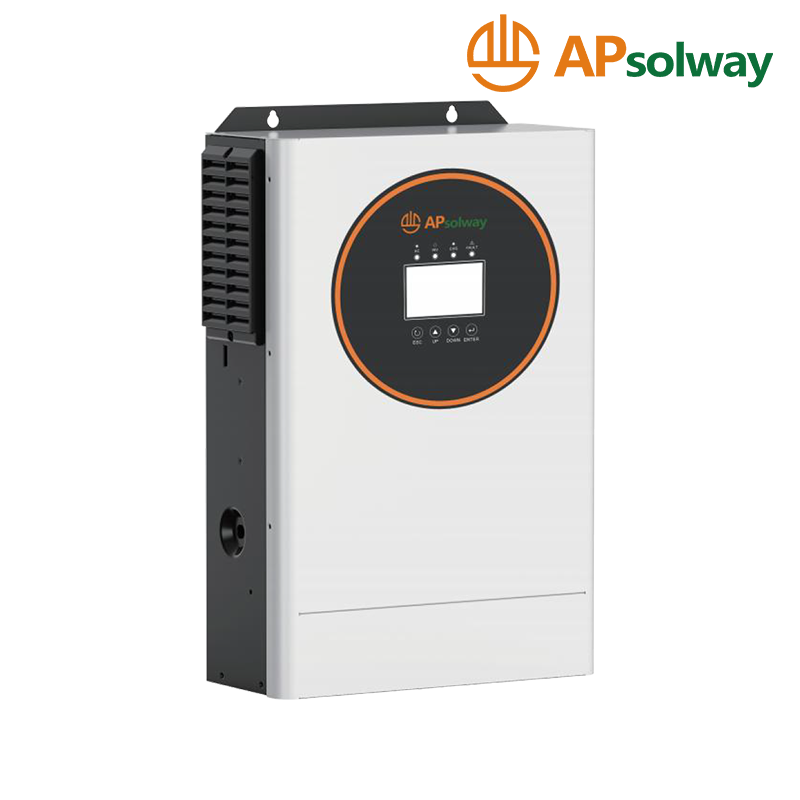
String inverters are the oldest and most widely used inverter technology in residential and commercial solar installations. The concept is straightforward: multiple solar panels are wired together in a series "string," and all the DC power from that string flows into a single centralized inverter, which then converts it to AC power. Most homes have one or two string inverters, typically mounted on an exterior wall near the main electrical panel.
The primary advantage of string inverters is cost. They are significantly less expensive per watt than microinverters or power optimizers, and because the system has fewer components overall, installation labor is also lower. Maintenance is simpler too — if something goes wrong, there is only one central unit to diagnose and replace rather than multiple devices on every panel.
Where String Inverters Perform Best
String inverters are the right choice when your roof has a large, unobstructed surface area facing a consistent direction — typically south-facing in the northern hemisphere. They shine in installations where all panels receive uniform sunlight throughout the day with minimal shading from trees, chimneys, vents, or neighboring structures. A commercial flat-roof installation or a clean residential rooftop with no obstacles is the ideal environment for a string inverter system.
The major limitation is the "weakest link" problem. Because panels are wired in series, the performance of the entire string is dragged down to the level of the worst-performing panel. If one panel is shaded, dirty, or malfunctioning, every panel in the string produces at a reduced level. This can cause significant energy losses in real-world installations where perfect, consistent sunlight is not always guaranteed.
Microinverters: Panel-Level Conversion for Maximum Output
Microinverters represent a fundamentally different approach. Instead of one central inverter handling all panels, a microinverter is attached to each individual solar panel and converts DC to AC right at the source. Each panel operates completely independently, so the performance of one panel has absolutely no effect on any other panel in the system.
This architecture eliminates the weakest-link problem entirely. In a shading scenario — for example, a chimney shadow passing across two panels in the morning — only those two panels are affected. The remaining panels continue operating at full capacity. Independent studies have shown that microinverter systems can produce 5% to 25% more energy than string inverter systems in real-world conditions with partial shading or panel mismatch.
The Monitoring and Safety Advantage
Microinverters offer granular monitoring at the panel level. Most systems, such as those using Enphase microinverters, include a cloud-based platform that shows the real-time and historical output of every single panel. If one panel underperforms due to soiling, physical damage, or cell degradation, the monitoring system flags it immediately. This level of visibility is simply not available with a standard string inverter, which only shows total system output.
Microinverters also offer an important safety benefit: because each panel outputs AC power at a low-voltage level, there are no high-voltage DC strings running across your roof. This reduces fire risk during emergency situations, which is why some fire codes and insurance policies increasingly favor microinverter installations. Enphase, the market leader in microinverters, warranties their IQ series for 25 years — matching the lifespan of the panels themselves.
The Tradeoffs to Consider
The main downside of microinverters is cost. A microinverter system typically costs 15% to 30% more upfront than a comparable string inverter system. Because there are more components — one per panel — there are also more potential points of failure over time, although modern microinverters are extremely reliable. If a unit does fail, it must be accessed on the roof, which adds to service costs compared to replacing a ground-mounted string inverter.
Power Optimizers: A Hybrid Approach Between String and Micro
Power optimizers, sometimes called DC optimizers, occupy the middle ground between string inverters and microinverters. Like microinverters, an optimizer is attached to each individual solar panel. However, unlike microinverters, optimizers do not convert DC power to AC at the panel. Instead, they condition and optimize the DC output of each panel independently — a process called maximum power point tracking (MPPT) at the panel level — and then send that optimized DC current to a central string inverter for the final conversion to AC.
SolarEdge is the dominant manufacturer in this space and has popularized the power optimizer architecture significantly over the past decade. The result is a system that gets the panel-level independence and shading tolerance of a microinverter system while still using a central inverter, which is typically more efficient at the inversion stage and easier to service than dozens of individual microinverters.
When Power Optimizers Make Sense
Power optimizers are particularly well-suited for rooftops with complex layouts or mixed orientations. If you have panels on both the east and west sides of your roof, or if panels face different directions due to roof geometry, a standard string inverter would struggle. With optimizers, each panel is independently maximized, so mixed-orientation systems operate at peak efficiency regardless of the panel configuration.
They are also a good fit for installations with moderate shading — not severe enough to justify the full cost premium of microinverters, but significant enough that a basic string inverter would result in meaningful energy losses. The optimizer cost premium over a pure string inverter is typically less than the premium for microinverters, making this the cost-effective middle ground for complex roof situations.
Side-by-Side Comparison of All Three Types
The table below provides a direct comparison of the three main inverter types across the most important decision-making criteria:
| Criteria | String Inverter | Microinverter | Power Optimizer |
| Upfront Cost | Lowest | Highest | Mid-range |
| Shading Tolerance | Poor | Excellent | Very Good |
| Panel-Level Monitoring | No | Yes | Yes |
| Ease of Maintenance | Easy | Moderate | Moderate |
| Roof Complexity | Low (simple roofs) | High (any layout) | High (any layout) |
| Typical Warranty | 10–12 years | 25 years | 12–25 years |
| DC Safety Risk | Higher | Lower | Lower |
| Best Use Case | Unshaded, uniform roofs | Shading, expandability | Mixed orientation, partial shade |
How to Choose the Right Solar Inverter for Your Home
Selecting the right inverter type comes down to four key factors: shading conditions, roof layout, budget, and future expansion plans. Here is how to think through each one systematically before committing to a system.
Evaluate Your Shading Situation Honestly
Walk around your property at different times of day and observe what casts shadows on your roof. Chimneys, dormers, skylights, satellite dishes, trees, and neighboring buildings all create shading issues. If any part of your planned panel area is shaded for more than an hour or two per day during peak sun hours, a string inverter alone is likely to underperform significantly. In that case, microinverters or power optimizers are a much wiser investment even if the upfront cost is higher, because the long-term energy gains will offset the premium over the life of the system.
Consider Roof Orientation and Panel Layout
If all your panels will be on a single south-facing plane with consistent tilt angles, a string inverter is efficient and cost-effective. If your roof has sections facing east and west, or multiple pitches at different angles, panels on different sections will produce at different rates throughout the day. Mixing panels with different orientations on one string inverter is a recipe for energy loss. Power optimizers or microinverters allow each panel to perform independently, making complex multi-orientation roofs viable and efficient.
Plan for Future Expansion
If you anticipate adding more panels in the future — perhaps when you buy an electric vehicle and your energy needs increase — microinverters offer the most flexible expansion path. Each new panel simply gets its own microinverter with no need to reconfigure a central unit. String inverters have capacity limits and may require replacement or an additional inverter to accommodate expansion, which adds complexity and cost down the road.
- Clean, south-facing roof with no shading → String inverter is the most cost-effective choice
- Partial shading from trees or obstructions → Power optimizers offer the best balance of performance and cost
- Heavy shading, complex roof, or priority on monitoring → Microinverters deliver the highest performance and visibility
- Budget-sensitive installation with good site conditions → String inverter maximizes value per dollar
- Planning future panel additions → Microinverters provide the easiest scalability
A Note on Battery Storage Compatibility
If you are planning to pair your solar system with a home battery — such as a Tesla Powerwall, Enphase IQ Battery, or SolarEdge Energy Bank — inverter compatibility becomes a critical factor. Enphase microinverter systems work natively with Enphase batteries through their AC-coupled architecture. SolarEdge optimizer systems pair cleanly with SolarEdge's own battery solution. String inverter systems can also support batteries but often require an additional hybrid inverter or battery inverter to manage the integration.
If battery storage is in your immediate or future plans, it is far easier and often less expensive to choose an inverter ecosystem that supports battery integration natively from the start. Retrofitting a storage system onto a non-compatible inverter setup adds hardware costs and complexity that are easily avoided with forward planning.
The Bottom Line: Match Your Inverter to Your Roof's Reality
The best solar inverter is the one that fits your specific roof, budget, and energy goals — not the one with the most features or the lowest sticker price. String inverters remain a reliable, proven, and cost-effective solution for straightforward installations. Microinverters deliver unmatched performance and monitoring for complex or shaded rooftops. Power optimizers strike an effective balance for the many homeowners whose situations fall somewhere in between.
Before finalizing any solar installation, ask your installer to provide a shade analysis using tools like Aurora Solar or PVWatts, and request a production estimate for each inverter type being considered. The difference in projected annual output can make the decision clear. A few hundred dollars more at installation can translate into thousands of dollars in additional energy production over a 25-year system lifespan — making inverter selection one of the most consequential choices in any solar project.
- Mp: +86-13819379269 / 15726870289
- Tel: +86-573-83705988
- Fax: +86-573-83705966
- E-mail: [email protected]
- Add: 10th Floor, Haizhou Star, Xiuzhou District, Jiaxing City, Zhejiang, China 314000
 Privacy
Solar Inverters Manufacturers
Privacy
Solar Inverters Manufacturers