
 EN
EN English
 Español
 عربى
عربى


Solar Inverter: Types, Functions & How to Choose the Right One
Content
- 1 What Is a Solar Inverter and Why Does It Matter?
- 2 How a Solar Inverter Works
- 3 Main Types of Solar Inverters
- 4 Comparing Inverter Types at a Glance
- 5 Key Specifications to Evaluate
- 6 Grid-Tied vs. Off-Grid vs. Hybrid: Choosing Your Configuration
- 7 Common Solar Inverter Problems and How to Address Them
- 8 Leading Solar Inverter Brands Worth Considering
- 9 Tips for Getting the Most from Your Solar Inverter
What Is a Solar Inverter and Why Does It Matter?
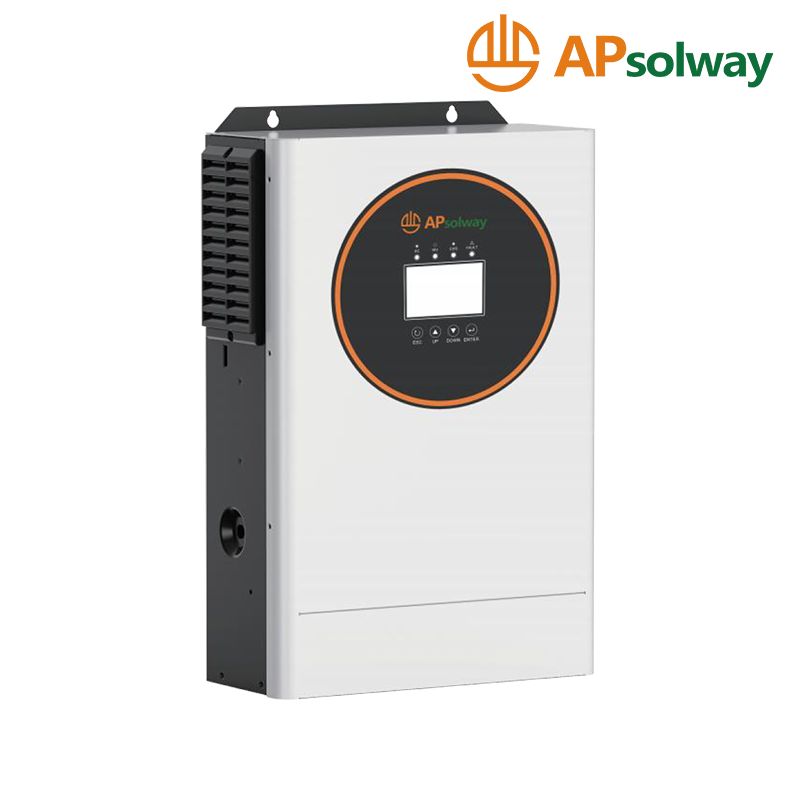
A solar inverter is the core component of any photovoltaic (PV) system. Its primary function is to convert the direct current (DC) electricity generated by solar panels into alternating current (AC) electricity, which is the standard form used by household appliances, businesses, and the utility grid. Without an inverter, the energy your solar panels produce would be unusable for everyday electrical needs.
Beyond simple energy conversion, modern solar inverters also handle a wide range of additional tasks: they monitor system performance in real time, manage battery storage integration, communicate with the grid for net metering, and provide safety shutoff functions during outages or faults. Choosing the right inverter directly affects how efficiently your solar system operates, how much energy you ultimately save, and how reliably your system performs over its lifespan.
How a Solar Inverter Works
Solar panels produce DC electricity when sunlight hits the photovoltaic cells. The inverter receives this raw DC power and processes it through a series of electronic switching components — typically insulated-gate bipolar transistors (IGBTs) or MOSFETs — that rapidly switch the current direction to simulate an AC waveform. This process is called pulse-width modulation (PWM) or space vector modulation, depending on the design.
The output is a smooth sine wave AC signal at the correct voltage and frequency (120V/60Hz in North America; 230V/50Hz in Europe and most of Asia). The inverter also synchronizes its output with the utility grid's waveform when operating in a grid-tied configuration, ensuring seamless power flow between your panels, your home, and the grid.
Most inverters also include a Maximum Power Point Tracking (MPPT) algorithm, which continuously adjusts electrical load to extract the maximum available power from the panels under varying sunlight and temperature conditions. This optimization can increase energy harvest by 20–30% compared to systems without MPPT.
Main Types of Solar Inverters
String Inverters
String inverters are the most common and cost-effective option. Multiple solar panels are wired together in a series "string," and the combined DC output is sent to a single centralized inverter. They are well-suited to rooftops with consistent, unshaded sun exposure. However, if one panel in the string is shaded or underperforms, it can drag down the output of the entire string — a limitation known as the "Christmas light effect."
Microinverters
Microinverters are installed on each individual solar panel, converting DC to AC right at the source. This panel-level conversion means that shading or soiling on one panel does not affect others. Microinverters are ideal for complex rooftops with multiple orientations or frequent partial shading. They also offer panel-level monitoring, allowing homeowners to track the performance of each individual panel. The main drawback is cost — microinverters are significantly more expensive per watt than string inverters.
Power Optimizers with String Inverters
Power optimizers are a middle-ground solution. Each panel is fitted with an optimizer that conditions the DC output before sending it to a central string inverter. Optimizers mitigate the shading problem while keeping overall system costs lower than a full microinverter setup. Brands like SolarEdge have popularized this topology, and it is now one of the most widely installed configurations in residential solar.
Hybrid Inverters
Hybrid inverters (also called battery-ready or multi-mode inverters) are designed to manage both solar panel input and battery storage in a single unit. They can charge a battery bank from solar energy, discharge it during peak demand or grid outages, and switch seamlessly between grid-tied and off-grid operation. As battery storage becomes more affordable, hybrid inverters are increasingly popular for homeowners seeking energy independence or backup power capability.
Off-Grid Inverters
Off-grid inverters are used in systems that operate entirely independently of the utility grid, such as remote cabins, agricultural installations, or developing-world electrification projects. These inverters work in conjunction with a battery bank and sometimes a generator backup. They must handle variable loads and manage battery state of charge autonomously, making them more complex and typically more expensive than grid-tied equivalents.
Comparing Inverter Types at a Glance
| Inverter Type | Best For | Shading Tolerance | Relative Cost | Battery Compatible |
| String Inverter | Unshaded, uniform rooftops | Low | $ | Some models |
| Microinverter | Complex rooftops, partial shade | High | $$$ | Yes (some) |
| Power Optimizer + String | Mixed shade, monitoring needs | High | $$ | Some models |
| Hybrid Inverter | Battery storage integration | Medium–High | $$$ | Yes |
| Off-Grid Inverter | Remote, grid-independent sites | Medium | $$–$$$ | Required |
Key Specifications to Evaluate
When selecting a solar inverter, look beyond the price tag and evaluate these critical technical parameters:
- Efficiency rating: The percentage of DC input that is successfully converted to AC output. Top-tier residential inverters achieve efficiencies of 97–99%. Even a 1–2% difference compounds meaningfully over 25 years.
- Continuous output power (watts): Must be sized appropriately for your panel array. Oversizing or undersizing the inverter leads to energy losses or clipping.
- MPPT input channels: More MPPT channels allow panels on different roof orientations or with different shading profiles to be optimized independently.
- Operating temperature range: Inverters lose efficiency in high heat. Units rated for wider temperature ranges (e.g., -25°C to 60°C) are more suitable for extreme climates.
- Protection ratings (IP rating): An IP65 or IP66 rating indicates strong protection against dust and water, which is important for outdoor or garage-mounted installations.
- Warranty length: Standard warranties range from 5 to 12 years for string inverters. Microinverters often carry 25-year warranties, matching the panel lifespan.
- Monitoring and connectivity: Wi-Fi or Ethernet-enabled inverters allow real-time performance monitoring via smartphone apps, which is valuable for detecting faults early.
Grid-Tied vs. Off-Grid vs. Hybrid: Choosing Your Configuration
The configuration you choose depends primarily on whether you have reliable grid access and whether battery backup is a priority.
Grid-tied systems are the most economical for homeowners with stable utility connections. Excess solar power is exported to the grid, often earning credits through net metering programs. However, grid-tied inverters are designed to shut down automatically during power outages (for safety reasons), meaning you lose power even if your panels are producing energy.
Off-grid systems are completely self-sufficient but require substantial battery storage and often a backup generator. These systems work best in locations where extending the grid is prohibitively expensive — typically rural or remote sites.
Hybrid systems offer the best of both worlds: you remain connected to the grid for reliability and net metering, while also storing surplus energy in batteries for use during outages or peak-rate hours. As battery costs continue to fall, hybrid configurations are becoming the preferred choice for new residential installations in many markets.
Common Solar Inverter Problems and How to Address Them
Even well-maintained inverters can encounter issues. Knowing what to watch for helps you respond quickly and minimize energy loss:
- Error codes and fault lights: Most inverters display fault codes that correspond to specific issues in the user manual. Common codes relate to grid frequency deviations, insulation faults, or overtemperature conditions.
- Overheating shutdowns: Inverters installed in poorly ventilated spaces can throttle output or shut down. Ensure at least 30 cm of clearance around the unit and avoid direct sunlight exposure where possible.
- Communication failures: If your monitoring app stops receiving data, the issue is usually Wi-Fi connectivity rather than the inverter itself. Restarting the router or re-pairing the inverter often resolves this.
- Reduced output over time: A gradual decline in output may indicate MPPT drift, firmware issues, or early-stage component degradation. Firmware updates from the manufacturer often address known performance issues.
Leading Solar Inverter Brands Worth Considering
The inverter market is competitive, with several established manufacturers offering reliable products across price points. Some of the most widely recognized brands include:
- SolarEdge: Known for its power optimizer ecosystem, strong monitoring platform, and expanding battery storage integration (StorEdge).
- Enphase Energy: The dominant microinverter brand globally, offering industry-leading 25-year warranties and a robust energy management app (Enlighten).
- Fronius: An Austrian manufacturer with a strong reputation for build quality and reliability, particularly popular in Europe and Australia.
- SMA Solar Technology: One of the oldest and most respected inverter manufacturers, offering a broad range from residential string inverters to large commercial systems.
- Growatt and Sungrow: Chinese manufacturers that have gained significant market share globally by offering competitive pricing without sacrificing core performance.
Tips for Getting the Most from Your Solar Inverter
Maximizing the return on your inverter investment involves both smart installation choices and ongoing attention:
- Have a certified installer perform the initial setup and commissioning to ensure correct configuration of MPPT channels and grid connection parameters.
- Keep inverter firmware up to date — manufacturers regularly release updates that improve efficiency, add features, or address bugs.
- Review your monitoring data weekly during the first year to establish a performance baseline, making it easier to spot anomalies later.
- Clean the air vents on the inverter housing annually to prevent dust buildup that can contribute to overheating.
- If your home energy usage changes significantly (e.g., you add an EV charger), reassess whether your current inverter capacity is still appropriate.
- Mp: +86-13819379269 / 15726870289
- Tel: +86-573-83705988
- Fax: +86-573-83705966
- E-mail: [email protected]
- Add: 10th Floor, Haizhou Star, Xiuzhou District, Jiaxing City, Zhejiang, China 314000
 Privacy
Solar Inverters Manufacturers
Privacy
Solar Inverters Manufacturers