
 EN
EN English
 Español
 عربى
عربى


Solar inverters guide: How to decide what’s right for you
Content
What Is a Solar On Grid Inverter
A solar on grid inverter, also known as a grid-tied inverter, is the core component that converts direct current electricity generated by solar panels into alternating current electricity compatible with the utility power grid and standard household appliances. Unlike off-grid systems that rely on battery storage to function independently, on grid inverters work in direct connection with the local utility network, allowing homeowners and businesses to draw power from the grid when solar production is insufficient and feed excess solar energy back into the grid when production exceeds consumption.
This grid-connected approach has made on grid inverters the most widely adopted solar inverter type globally, largely due to their lower upfront cost compared to battery-based systems and their ability to take advantage of net metering programs offered by many utility companies. Understanding how these inverters function and which type best suits a specific installation is essential for anyone planning a solar energy investment.
Main Types of On Grid Solar Inverters
On grid inverters are generally available in three main configurations, each suited to different installation sizes and roof characteristics.
String Inverters
String inverters are the most common and cost-effective option, connecting a series or "string" of solar panels to a single central inverter unit, typically mounted near the main electrical panel. This design works well for roofs with consistent sun exposure and minimal shading, as the entire string's output is limited by the lowest-performing panel in that series, making uniform sunlight conditions important for optimal performance.
Microinverters
Microinverters are installed individually behind each solar panel, converting DC to AC power at the panel level rather than centrally. This configuration allows each panel to operate independently, meaning shading or performance issues on one panel do not drag down the output of the entire system, a significant advantage for roofs with partial shading from trees, chimneys, or complex angles.
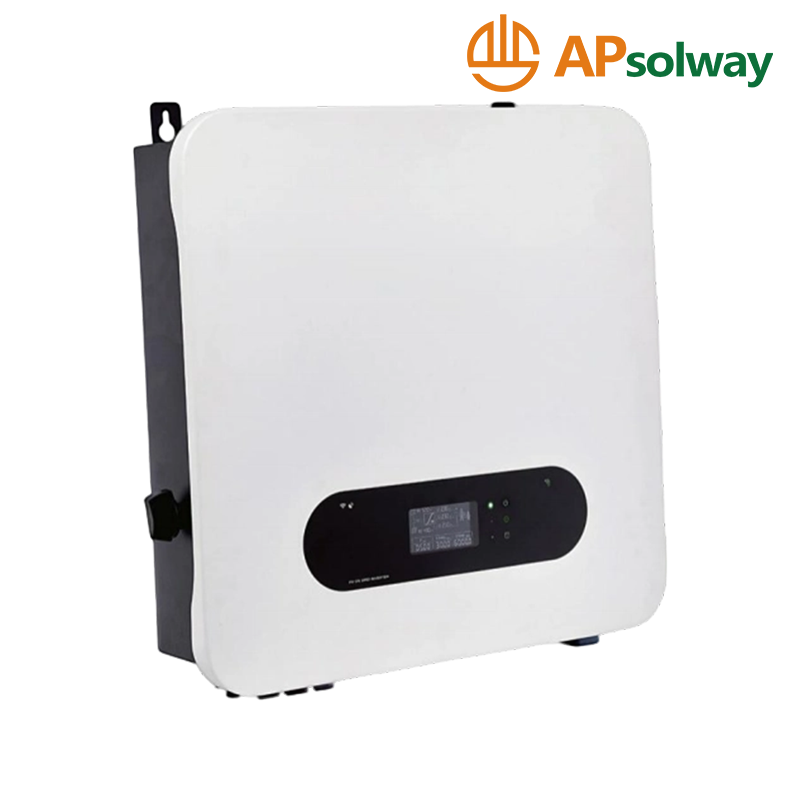
Power Optimizers with String Inverters
This hybrid approach pairs a central string inverter with individual power optimizers attached to each panel. The optimizers condition the DC power at the panel level before sending it to the central inverter, offering many of the shading-resilience benefits of microinverters while maintaining some of the cost efficiency associated with centralized string inverter systems.
Comparing Inverter Types Side by Side
The table below summarizes the key differences between the three main on grid inverter types to help guide your decision-making process.
| Inverter Type | Best Suited For | Relative Cost |
| String Inverter | Unshaded, simple roof layouts | Lowest |
| Microinverter | Shaded or complex roof layouts | Highest |
| String Inverter with Optimizers | Partial shading, moderate complexity | Moderate |
Key Factors to Consider When Choosing an On Grid Inverter
Selecting the right on grid inverter involves evaluating several site-specific and system-specific factors beyond just upfront cost.
- Roof shading conditions — properties with partial shade generally benefit more from microinverters or power optimizers.
- System size — larger installations may achieve better cost efficiency with centralized string inverters.
- Future expansion plans — panel-level inverters make it easier to add panels later without redesigning the entire string configuration.
- Monitoring needs — panel-level systems typically offer more detailed performance monitoring for individual panels.
- Local grid requirements — confirm the inverter meets your utility's specific interconnection and safety standards.
Understanding Efficiency Ratings and Warranty Coverage
Inverter efficiency, typically expressed as a percentage, indicates how much of the DC power generated by solar panels is successfully converted into usable AC power, with modern inverters commonly achieving efficiency ratings between 95 and 99 percent. While these differences may seem small, even a few percentage points can meaningfully affect total energy production over the lifespan of a solar system, particularly for larger installations.
Warranty length also varies significantly between inverter types, with string inverters typically offering shorter warranty periods of around 10 to 12 years, while microinverters often come with extended warranties of 20 to 25 years, aligning more closely with the typical lifespan of the solar panels themselves. This warranty difference should factor into long-term cost calculations, as inverter replacement represents a notable expense during the life of a solar energy system.
Making the Final Decision for Your Property
Choosing the right on grid solar inverter ultimately depends on balancing your property's specific shading conditions, budget constraints, and long-term energy goals. Properties with straightforward, unobstructed roof access and a focus on minimizing upfront costs are often well served by string inverters, while those dealing with partial shading, complex roof geometry, or a strong preference for detailed performance monitoring may find the additional investment in microinverters or power optimizers worthwhile over the system's lifetime. Consulting with a qualified solar installer who can assess your specific roof conditions and energy usage patterns remains the most reliable way to confirm which inverter configuration will deliver the best long-term value for your particular situation.
- Mp: +86-13819379269 / 15726870289
- Tel: +86-573-83705988
- Fax: +86-573-83705966
- E-mail: [email protected]
- Add: 10th Floor, Haizhou Star, Xiuzhou District, Jiaxing City, Zhejiang, China 314000
 Privacy
Solar Inverters Manufacturers
Privacy
Solar Inverters Manufacturers