
 EN
EN English
 Español
 عربى
عربى


How Do Solar On-Grid Inverters Work and Which Type Is Right for You?
Content
- 1 How On-Grid Solar Inverters Work
- 2 Key Types of On-Grid Inverters
- 3 Sizing an On-Grid Inverter to Your Solar Array
- 4 Grid Synchronization and Anti-Islanding Protection
- 5 Efficiency Ratings and What They Mean for Energy Output
- 6 Installation and Wiring Considerations
- 7 Maintenance and Monitoring for Long-Term Performance
How On-Grid Solar Inverters Work
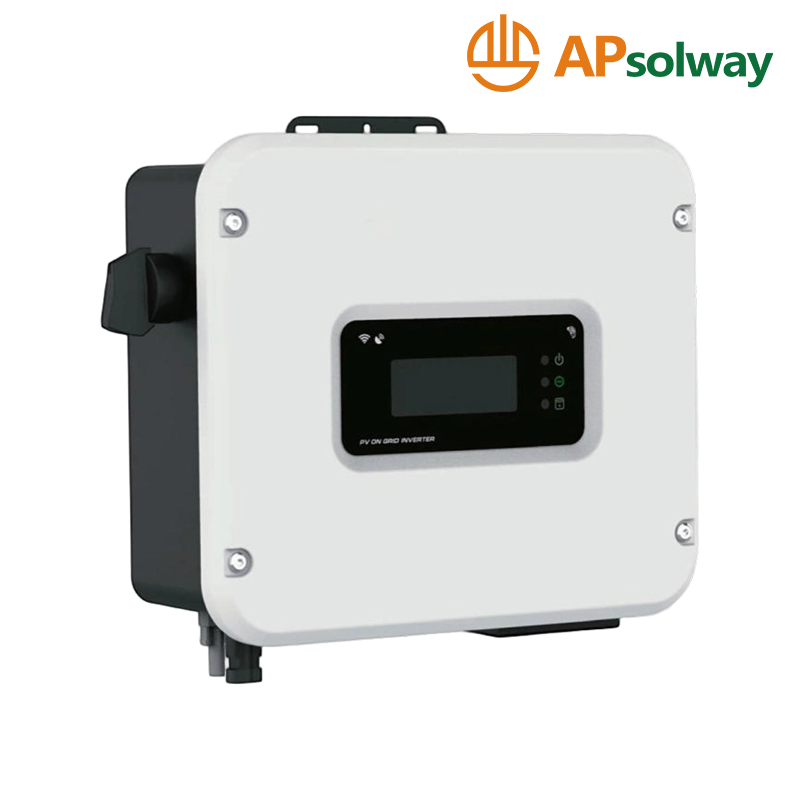
An on-grid solar inverter, also called a grid-tied inverter, converts the direct current electricity produced by solar panels into alternating current that matches the voltage, frequency, and phase of the local utility grid. Unlike off-grid inverters, which rely on battery storage to supply power independently, on-grid inverters feed surplus electricity directly into the utility network and draw power back from the grid whenever solar production is insufficient, such as during nighttime hours or heavy cloud cover. This direct grid connection eliminates the need for battery banks in most residential and commercial installations, which significantly lowers both the upfront system cost and the ongoing maintenance burden compared to off-grid or hybrid setups.
Because the inverter must continuously match its output to grid conditions, it constantly monitors voltage and frequency in real time, adjusting its output waveform to stay synchronized. This synchronization is what allows excess solar energy to be exported safely to the grid under net metering or feed-in tariff arrangements, depending on local utility policy.
Key Types of On-Grid Inverters
Choosing the right inverter architecture affects system efficiency, cost, and how the installation responds to shading or panel-level issues. The two most common approaches used in residential and small commercial solar systems are string inverters and microinverters.
String Inverters
A string inverter connects to a series, or string, of solar panels wired together, converting the combined DC output from the entire string into AC power at a single central point. This approach is generally less expensive per watt than microinverters and is well suited to installations where the roof has consistent sun exposure across all panels without significant shading from trees, chimneys, or neighboring structures. The main limitation is that if one panel in a string underperforms due to shading or a fault, it can reduce the output of the entire string rather than just that individual panel, since the panels are wired in series.
Microinverters
Microinverters are installed individually on each solar panel, converting DC to AC at the panel level rather than combining DC output first. This design means that shading or a fault on one panel only affects that single panel's output, leaving the rest of the array unaffected, which makes microinverters a better choice for roofs with partial shading, multiple roof angles, or panels facing different directions. Microinverters also simplify monitoring, since panel-level performance data is available individually, though the higher per-panel cost and the need to service inverters mounted on the roof rather than at ground level are tradeoffs worth considering.
Sizing an On-Grid Inverter to Your Solar Array
Inverter sizing is typically expressed as a DC-to-AC ratio, comparing the total rated DC capacity of the solar panels to the inverter's rated AC output capacity. A ratio between 1.1 and 1.3 is common in practice, meaning the panel array is intentionally oversized relative to the inverter, since panels rarely produce their full rated output simultaneously due to temperature losses, angle of sunlight, and other real-world factors. Undersizing the inverter too aggressively can lead to clipping, where excess DC power above the inverter's capacity is simply lost rather than converted, while oversizing the inverter relative to the panel array wastes money on unused capacity.
| Solar Array Size (DC) | Recommended Inverter Size (AC) | Typical DC/AC Ratio |
| 5 kW | 4 to 4.5 kW | 1.1 to 1.2 |
| 10 kW | 8 to 9 kW | 1.1 to 1.25 |
| 20 kW | 16 to 18 kW | 1.1 to 1.25 |
Grid Synchronization and Anti-Islanding Protection
A critical safety feature in every on-grid inverter is anti-islanding protection, which automatically disconnects the inverter from the grid within a fraction of a second if utility power is lost, such as during a planned outage or grid maintenance work. Without this feature, a solar system could continue energizing the local grid line even after the utility has shut it off for repairs, creating a serious electrocution risk for utility workers. Anti-islanding protection is a mandatory requirement under interconnection standards such as IEEE 1547 in the United States, and any inverter installed for grid connection must be certified to meet this standard before a utility will approve the system for interconnection.
Beyond anti-islanding, modern on-grid inverters also include voltage and frequency ride-through settings, which allow the system to briefly tolerate minor grid fluctuations without disconnecting unnecessarily, improving overall grid stability as solar adoption increases on a given distribution network.
Efficiency Ratings and What They Mean for Energy Output
Inverter efficiency, usually expressed as a percentage such as 97 or 98 percent, indicates how much of the DC power received from the panels is successfully converted into usable AC power, with the remainder lost as heat during the conversion process. While a one or two percent difference in efficiency between inverter models may seem minor, it compounds meaningfully over the inverter's typical 10 to 15 year service life, particularly on larger commercial installations where even small efficiency gains translate into a measurable difference in total energy production and financial return.
It is also worth checking an inverter's weighted efficiency rating, sometimes called the CEC efficiency rating, rather than just its peak efficiency figure, since weighted ratings account for performance across a range of real-world operating conditions rather than only the inverter's best-case output level.
Installation and Wiring Considerations
On-grid inverters should be mounted in a shaded, well-ventilated location, since excessive heat exposure reduces both efficiency and long-term component lifespan. Many manufacturers recommend installation on a north-facing wall in the northern hemisphere or an equivalent shaded exterior wall to avoid direct afternoon sun exposure, which can cause the inverter to derate its output during the hottest part of the day. DC wiring between the panels and inverter should follow the manufacturer's specified maximum voltage and current limits closely, since exceeding these limits, particularly in colder climates where panel voltage rises, can damage the inverter's input circuitry.
A licensed electrician should handle the AC-side connection to the home or business's electrical panel and coordinate the utility interconnection application, since most utilities require a formal approval process, including inspection, before allowing the system to be energized and connected to the grid.
Maintenance and Monitoring for Long-Term Performance
On-grid inverters generally require less hands-on maintenance than battery-based systems, but periodic checks still matter for catching problems early. Most modern inverters include built-in monitoring software accessible through a smartphone app or web portal, allowing homeowners or system operators to track daily production, identify sudden drops in output, and receive fault alerts if a string or panel stops performing as expected. Keeping the area around the inverter free of dust, debris, and vegetation overgrowth helps maintain proper airflow for cooling, while an annual visual inspection of wiring connections and the inverter's display panel for error codes helps catch developing issues before they affect overall system output.
- Review monitoring data monthly to catch gradual output decline that might indicate panel soiling or developing faults.
- Keep the inverter's ventilation area clear of dust, insects, and debris that could restrict airflow and cause overheating.
- Check for firmware updates periodically, since manufacturers occasionally release updates that improve grid compliance or efficiency.
- Schedule a professional inspection every few years to check wiring integrity and confirm the inverter still meets local grid compliance standards.
- Mp: +86-13819379269 / 15726870289
- Tel: +86-573-83705988
- Fax: +86-573-83705966
- E-mail: [email protected]
- Add: 10th Floor, Haizhou Star, Xiuzhou District, Jiaxing City, Zhejiang, China 314000
 Privacy
Solar Inverters Manufacturers
Privacy
Solar Inverters Manufacturers