
 EN
EN English
 Español
 عربى
عربى


A Practical Guide to Choosing and Sizing Solar On Grid Inverters
Content
How Solar On Grid Inverters Power Grid-Connected Systems
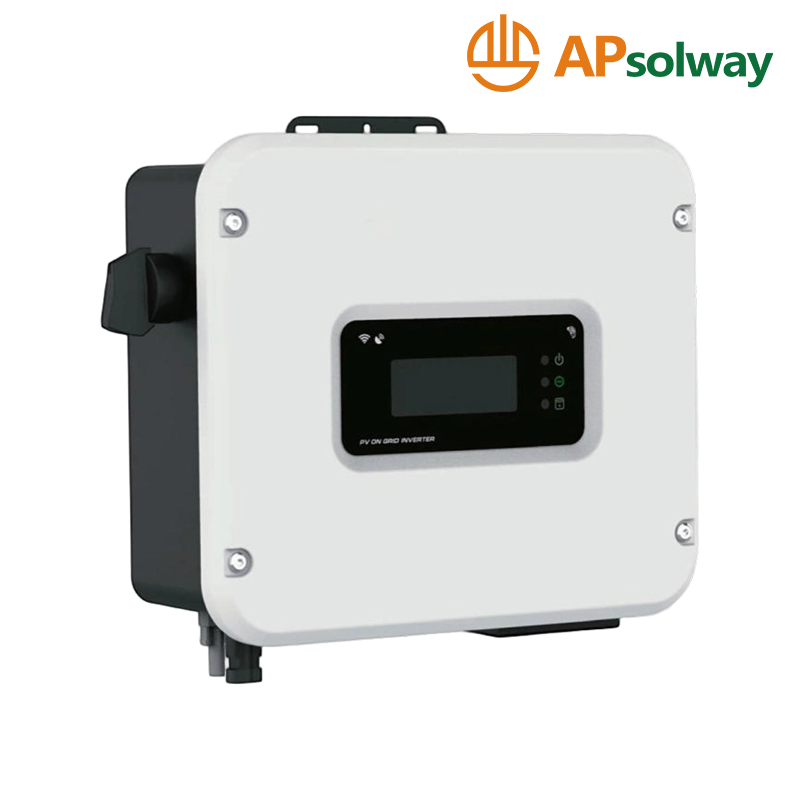
A solar on grid inverter, also called a grid-tied inverter, is the core component that allows a solar power system to operate in direct connection with the utility grid rather than relying on battery storage. Its main function is to convert the direct current (DC) electricity generated by solar panels into alternating current (AC) electricity that matches the voltage, frequency, and phase of the utility grid, allowing solar-generated power to be used directly by household or commercial loads, or exported back to the grid when production exceeds consumption.
Because on grid systems do not require battery banks, they tend to be simpler, more affordable, and easier to maintain than off-grid or hybrid alternatives. However, this simplicity comes with tradeoffs, particularly around what happens during grid outages. Understanding how these inverters work, what specifications matter most, and how to size and install a system properly can help property owners make informed decisions when investing in solar infrastructure.
Core Functions of a Grid-Tied Inverter
Beyond basic DC to AC conversion, on grid inverters perform several functions that ensure safe, efficient, and compliant operation alongside the utility grid.
Maximum Power Point Tracking (MPPT)
MPPT technology continuously adjusts the electrical operating point of the solar array to extract the maximum possible power output as sunlight conditions change throughout the day. Inverters with multiple MPPT channels allow different strings of panels, potentially facing different directions or experiencing partial shading, to be optimized independently rather than being limited by the weakest-performing string.
Anti-Islanding Protection
Anti-islanding is a required safety feature that automatically shuts down the inverter's output during a grid outage. This prevents the solar system from continuing to feed electricity into grid lines that utility workers may believe are de-energized, protecting both equipment and personnel during repair work.
Grid Synchronization
The inverter constantly monitors grid voltage and frequency, adjusting its output to remain synchronized. Any deviation outside acceptable tolerances triggers the inverter to disconnect temporarily, which protects both the solar system and the connected grid infrastructure from instability.
String Inverters vs Microinverters vs Power Optimizers
Choosing between the main types of grid-tied inverter systems depends on roof layout, shading conditions, and budget. Each option handles panel-level power conversion differently, which affects overall system performance and cost.
| Inverter Type | Best For | Relative Cost |
| String Inverter | Simple roofs with uniform sun exposure | Low |
| Microinverter | Complex roofs with partial shading | High |
| Power Optimizer + Central Inverter | Moderate shading with panel-level monitoring needs | Medium |
String inverters remain the most common choice for residential systems due to their lower upfront cost and simpler installation, but they are more vulnerable to shading issues since a shadow on one panel can reduce output across the entire string. Microinverters address this by converting power at each individual panel, isolating the impact of shading or panel-specific issues to a single unit rather than the whole array.
Key Specifications to Compare When Selecting an Inverter
Several technical specifications determine how well an inverter will perform with a given solar array and how efficiently it converts available sunlight into usable electricity.
- Rated AC output power, which should align closely with the total DC capacity of the connected panel array
- Peak efficiency rating, typically above 97 percent for quality residential and commercial inverters
- Maximum input voltage and MPPT voltage range, which determine how many panels can be wired in series per string
- Number of MPPT channels, relevant for installations with multiple roof orientations
- Communication capabilities, including Wi-Fi or Ethernet monitoring for tracking real-time production data
Oversizing the DC array relative to the inverter's rated AC output, generally by a ratio of 1.1 to 1.25, is a common practice known as DC-to-AC oversizing. This compensates for the fact that panels rarely produce their full rated output simultaneously, allowing the system to generate more usable energy during lower-light conditions without exceeding the inverter's maximum capacity during peak sun hours.
Sizing an On Grid Inverter for Your System
Proper sizing starts with calculating the total DC wattage of the planned solar array, then selecting an inverter with an AC output rating that falls within the recommended oversizing ratio. Installers also need to verify that the inverter's voltage window matches the string configuration, since wiring too many panels in series can push the string voltage beyond the inverter's maximum input rating, particularly in cold climates where panel voltage rises in low temperatures.
Accounting for Local Climate
Temperature coefficients affect panel voltage output significantly. In colder regions, open-circuit voltage increases, meaning string sizing calculations must include a safety margin to avoid exceeding the inverter's maximum input voltage on cold, sunny mornings when voltage peaks are highest.
Future Expansion Planning
Homeowners planning to add panels in the future should select an inverter with some reserve capacity beyond immediate needs, since replacing an undersized inverter later is more expensive than installing a slightly larger unit upfront.
Maintenance and Long-Term Reliability
On grid inverters generally require minimal maintenance compared to battery-based systems, but periodic checks help maintain performance over their typical 10 to 15 year lifespan. Keeping the inverter's ventilation fins and cooling fans free of dust buildup prevents overheating, which can trigger automatic power throttling during hot summer months. Reviewing production data through the inverter's monitoring app on a regular basis also helps catch performance drops early, which can indicate a failing MPPT channel, a loose connection, or a developing panel issue before it becomes a larger problem.
Most manufacturers offer warranties ranging from 5 to 12 years depending on the inverter tier, with premium models often extending closer to the 20 to 25 year warranty period offered on the solar panels themselves. Choosing an inverter with a warranty length that reasonably matches the expected system lifespan reduces the likelihood of needing an out-of-warranty replacement partway through the system's operational life.
- Mp: +86-13819379269 / 15726870289
- Tel: +86-573-83705988
- Fax: +86-573-83705966
- E-mail: [email protected]
- Add: 10th Floor, Haizhou Star, Xiuzhou District, Jiaxing City, Zhejiang, China 314000
 Privacy
Solar Inverters Manufacturers
Privacy
Solar Inverters Manufacturers