
 EN
EN English
 Español
 عربى
عربى


Company News 2026/06/08
SNEC 2026 Review: PV-ESS Integration Leads the Smart Energy Future Boin Group’s APsolway Technology Showcases Hybrid Inverters, Microinverters and Lithium Batteries
From June 3 to 5, the 19th (2026) International Photovoltaic Power Generation and Smart Energy Exhibition & Conference (SNEC 2026) grandly kicked off at the National Exhibition and Convention Center (Shanghai). Centered on the theme PV-ESS Integration, Forging a Smart Future – Shifting from Scale Competition to the Next Phase of Industrial Rivalry, the exhibition spanned 360,000 square meters. It gathered over 3,000 enterprises from 95 countries and regions worldwide, attracting more than 500,000 professional visitors. As a bellwether for the global PV and energy storage sector, the event clearly reflected the industry’s transformation: competition is no longer merely focused on module power output and levelized electricity cost, but has evolved into a systemic competition featuring integrated PV, energy storage, and hydrogen solutions, AI dispatching, and comprehensive smart energy systems.
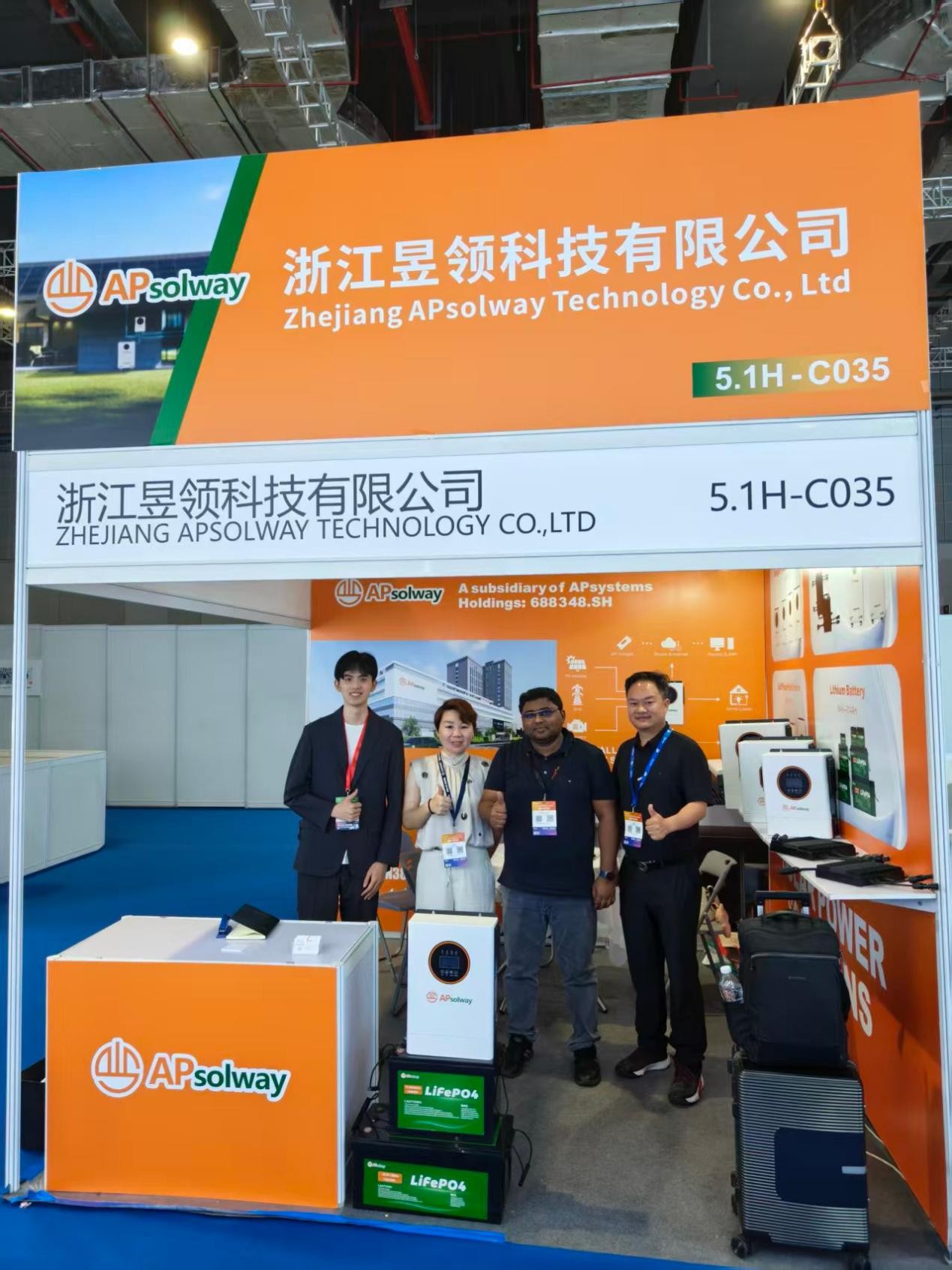
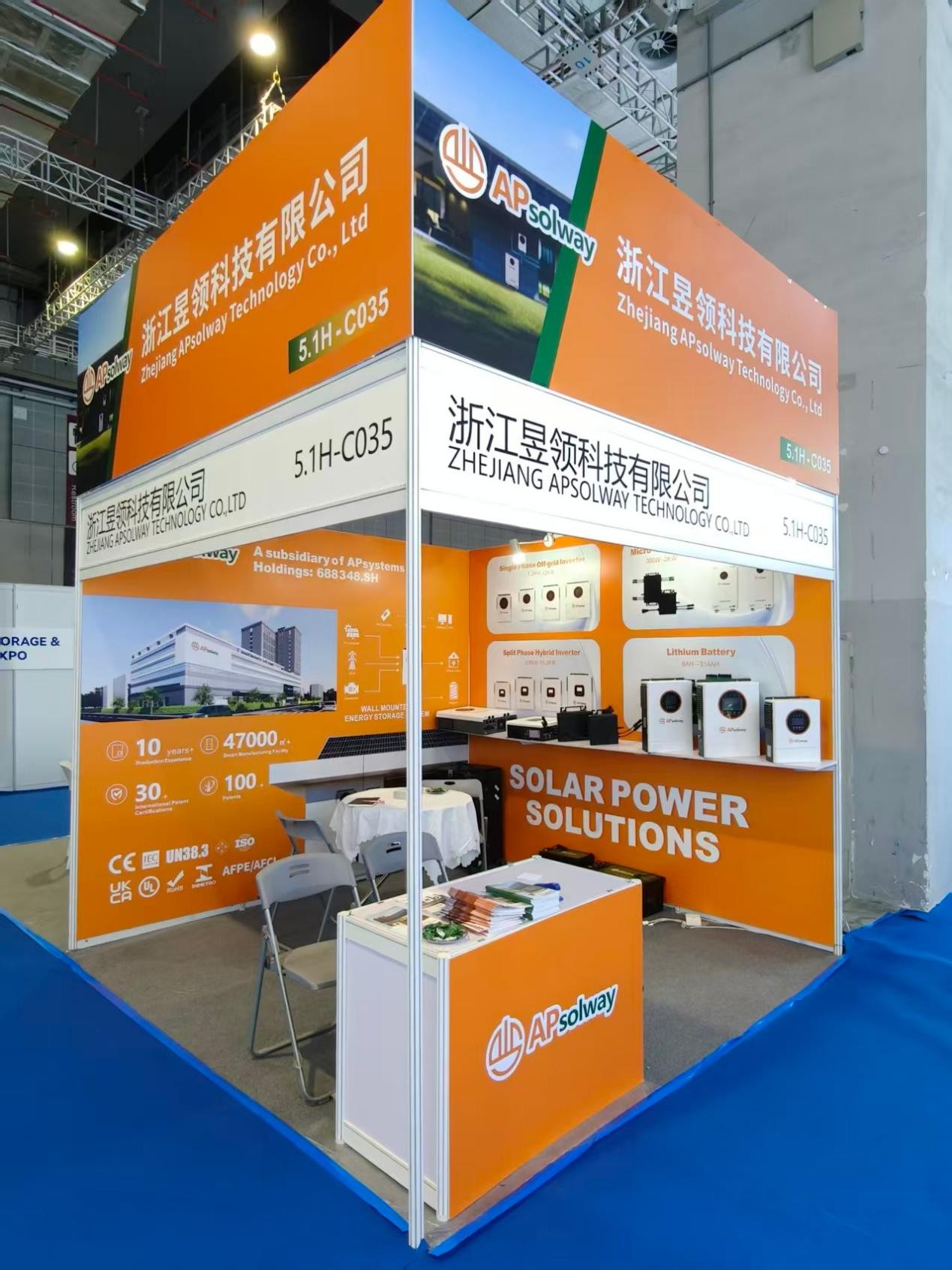
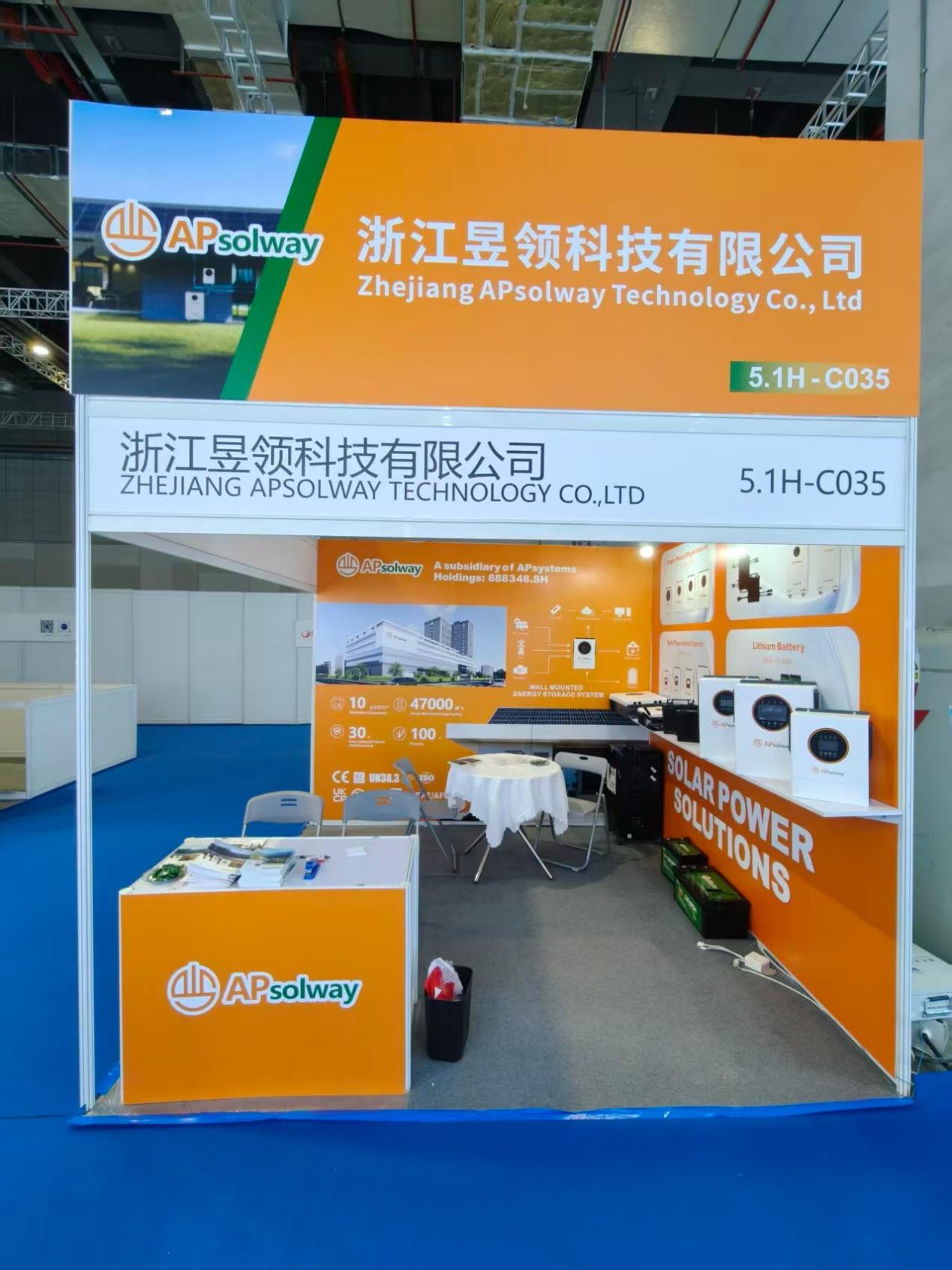
Against the backdrop of prevailing PV-ESS integration, Zhejiang APsolway Technology Co., Ltd. (APsolway Technology), a subsidiary of Boin Group, presented its latest hybrid inverters, microinverters, and high-performance lithium battery systems. The company delivers one-stop PV-ESS solutions for residential and small commercial scenarios. Its booth drew crowds of distributors and installers from Europe, Southeast Asia, and the Middle East for in-depth negotiations. A Polish residential PV installer commented: "APsolway’s hybrid inverters support automatic on/off-grid switching and achieve seamless compatibility with lithium batteries, making them ideal for local household energy storage projects."
PV-ESS Integration Takes Center Stage, Energy Storage Pavilions Dominate the Venue
The most notable shift at this year’s exhibition is the robust growth of the energy storage segment. The number of pavilions dedicated to inverters, power supplies, energy storage equipment, and related systems has increased to six, accounting for nearly half of the total 14 exhibition halls, a clear sign of the accelerated industrial shift toward energy storage. Fewer exhibitors now focus solely on PV products, while most enterprises have transformed into comprehensive energy service providers, with energy storage pavilions outshining traditional PV manufacturing areas in visitor popularity.
Leading PV enterprises have fully rolled out their PV-ESS integration strategies. LONGi Green Energy comprehensively unveiled its full-stack LONGi ONE strategy, extending from BC PV technology to the 5S native integration of complete energy storage systems. Jinko Energy showcased its Flying Tiger 5 modules (maximum power: 700W, efficiency: 25.91%) and Blue Whale SunTera G5 battery energy storage system. Trina Solar launched its 3rd-generation Vertex modules and full-stack energy storage solutions. Home appliance giants, including Haier, Midea, and AUX, have also stepped up their layout in the sector from tentative attempts to in-depth development, exhibiting with independent brand images and bringing new dynamics to the industry.
While large-scale PV-ESS systems thrive, APsolway Technology has precisely targeted the residential energy storage track. Its hybrid inverters support both on-grid and off-grid operation, enabling intelligent scheduling among PV modules, energy storage units, loads, and power grids. The microinverters are tailored for small-scale distributed applications such as balcony PV systems, equipped with module-level MPPT and rapid shutdown functions. The high-performance lithium batteries adopt lithium iron phosphate cells with a cycle life of over 6,000 times, and the built-in BMS provides multi-layer protection against overcharging, overdischarging, and overheating. The complete system enables households to realize self-consumption of generated power, surplus energy storage, and peak-valley arbitrage. Amid the power market reform, energy storage has evolved from a regulatory burden into a profitable asset.
Five Core Technology Trends Reshape the Industry Landscape
The exhibition highlighted five key technological trends, many of which align closely with APsolway Technology’s R&D roadmap.
Grid-Forming Energy Storage Becomes Standard Configuration
Huawei Digital Energy put forward the vision of Ubiquitous Grid-Forming Technology, Empowered by AI Everywhere. TBEA’s 500kW high-power string inverters are equipped with grid-forming capabilities. Grid-forming technology is expanding from large power stations to commercial, industrial and off-grid scenarios. APsolway Technology’s new-generation hybrid inverters are pre-installed with grid-forming functional interfaces, adapting to future weak grid and microgrid applications.
Long-Duration Energy Storage (8+ Hours) Sees Rapid Growth
Hicapower unveiled the world’s first native 8-hour long-duration energy storage solution, while CATL displayed a 9MWh large-scale energy storage system. Synergy between long-duration energy storage and residential energy storage is becoming prominent. APsolway’s lithium battery systems support deep charge-discharge cycles to meet multi-day power backup demands for households.
In-Depth Integration of AI and Energy Management
Aiswei launched the industry’s first AI-powered smart energy management system, and SunGrow released its Blue Ocean Navigation energy internet platform. APsolway Technology is embedding AI algorithms into its EMS (Energy Management System) to realize residential load forecasting and intelligent dispatching of PV, energy storage, and charging facilities.
Silicon Carbide (SiC) Power Devices Gain Wider Adoption
Featuring higher switching frequency, greater power density, and lower power loss, SiC devices are being increasingly applied in residential hybrid inverters and power conversion systems for energy storage. APsolway has adopted SiC solutions in its new-generation hybrid inverters, delivering a substantial improvement in overall system efficiency.
Hybrid Energy Storage Systems (HESS) Gain Traction
Combining batteries and supercapacitors, HESS balances long-duration energy capacity and millisecond-level response speed. APsolway Technology is developing inverter-supercapacitor modules for household use to cope with the inrush current generated by inductive loads such as air conditioners and refrigerators during startup.
Industry Enters Adjustment Phase; APsolway Builds Quality Moat Leveraging Group Resources
The PV industry entered a period of adjustment in 2026. China’s newly installed PV capacity recorded a year-on-year decline in Q1, marking the first negative growth since the advent of grid parity. Plagued by overcapacity, price wars and the cancellation of export tax rebates, the industry landscape is undergoing profound restructuring. In contrast, the energy storage and off-grid power sectors are booming, with overseas residential energy storage demand surging.
Exaggerated power ratings and potential safety hazards remain persistent pain points in the residential energy storage sector. Backed by Boin Group’s robust supply chain and manufacturing capabilities, all hybrid inverters and lithium battery systems from APsolway Technology undergo stringent factory inspections to guarantee authentic parameters and reliable operation. Solowatt, another brand under Boin Group, though not exhibiting at SNEC 2026, ranks among China’s top 3 automotive inverter suppliers. Its manufacturing philosophy of 100% full inspection and genuine power rating for off-grid automotive power supplies has established unified technical standards and quality management systems for APsolway’s residential energy storage products. The two brands achieve technological synergy, covering residential energy storage and off-grid automotive power applications.
Through the dual-brand layout of APsolway Technology and Solowatt, Boin Group’s products cover full voltage platforms of 12V, 24V, and 48V, catering to diverse scenarios including household backup power, off-grid residences, RVs, trucks, and camping trailers. The group runs an after-sales service center in Leipzig, Germany, and its products have obtained more than ten international certifications, including CE, RoHS, ETL, TÜV, FCC, and UL.
New Policy Signals Bring Standardization Dividends to Residential Energy Storage
New regulatory policies drew widespread attention during the exhibition. The updated grid connection guidelines will take effect nationwide on June 18, implementing a three-color zoning management mechanism. Starting from July 1, all power generated by commercial and industrial PV systems will be traded in the market, with fixed benchmark feed-in tariffs abolished. These changes have turned residential energy storage from an optional add-on into a necessity. APsolway’s hybrid inverters and lithium battery systems effectively help households maximize benefits via self-consumption, surplus energy storage and peak-valley arbitrage.
Additionally, the North American RVIA has stipulated that starting from September 1, 2026, charge controllers for all factory-installed PV systems on recreational vehicles must obtain UL listing certification. This trend indicates that major global markets will enforce increasingly stringent regulations on the safety, performance and power rating authenticity of off-grid power equipment. With proactive certification deployment, Boin Group and APsolway Technology are well-positioned to adapt to the upgraded compliance requirements.
During SNEC 2026, Boin Group announced plans to further increase R&D investment in APsolway Technology. The group will promote in-depth integration of hybrid inverters with solid-state batteries and AI energy management systems, while expanding business in emerging markets across the Middle East and Southeast Asia. It aims to deliver all-scenario smart power solutions for global customers, covering residential and mobile applications as well as on-grid and off-grid operation.
The conclusion of SNEC 2026 marks the end of the first phase and the full launch of the next era for the PV and energy storage industry. Competition has shifted from scale expansion to value creation, from single-product supply to integrated system solutions, and from domestic market saturation to global layout. Amid this profound transformation, APsolway Technology focuses on the residential energy storage track with core products including hybrid inverters, microinverters and high-performance lithium batteries, emerging as a representative player that prioritizes quality and niche markets amid industry adjustments. Though not present at the exhibition, Solowatt adheres to the long-term principle of genuine power rating and full factory inspection in the off-grid automotive power sector, providing solid quality support for Boin Group’s competition in the new phase of the new energy industry.
The hustle and bustle of the exhibition will fade away, yet authentic technical data, reliable product quality and professional service are the true strengths for enterprises to weather industry cycles and embrace future opportunities.
Let's a Talk
Keep in touch with us
Message Us Right Now!
Contact
- Mp: +86-13819379269 / 15726870289
- Tel: +86-573-83705988
- Fax: +86-573-83705966
- E-mail: [email protected]
- Add: 10th Floor, Haizhou Star, Xiuzhou District, Jiaxing City, Zhejiang, China 314000
Copyright © Zhejiang APsolway Technology Co., Ltd. All Rights Reserved.
 Privacy
Solar Inverters Manufacturers
Privacy
Solar Inverters Manufacturers